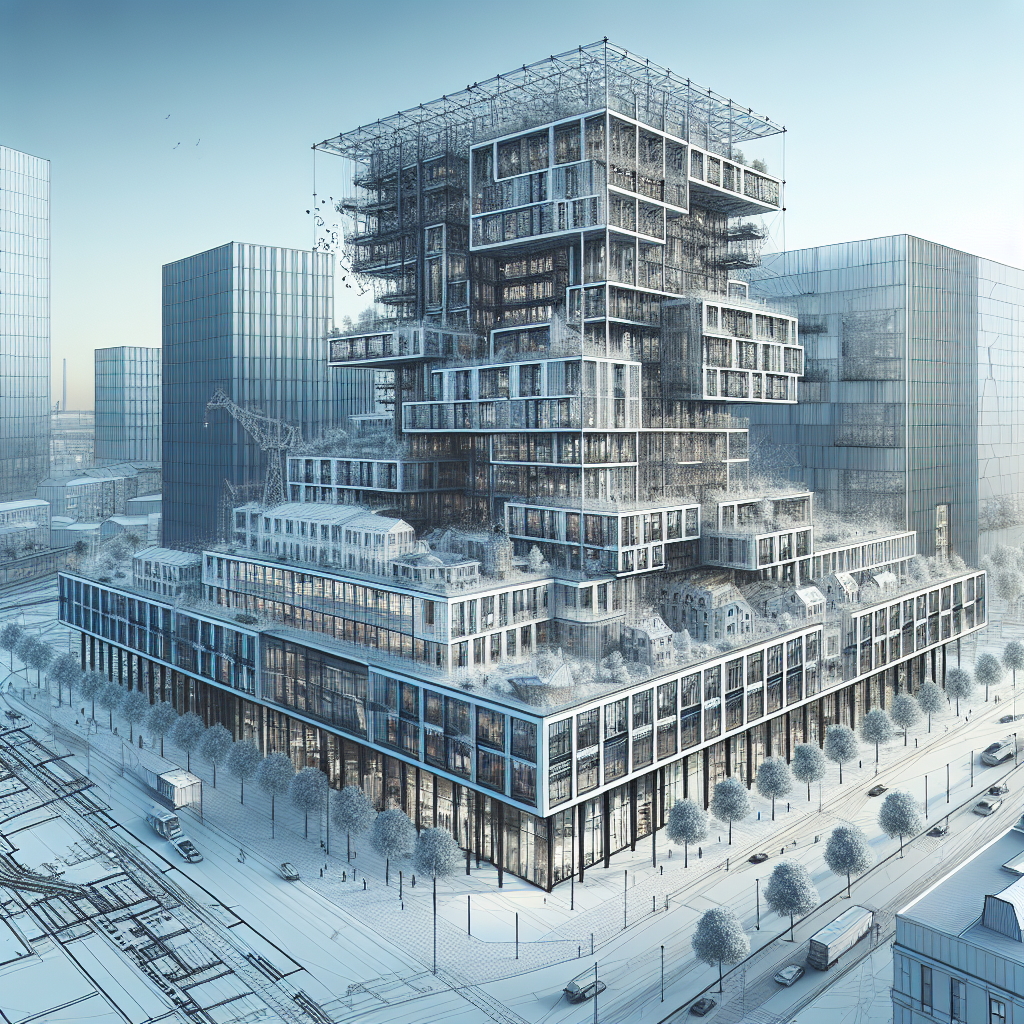
Denmark and Sweden’s architecture scenes continue to set global benchmarks, blending functional design with artistic innovation. The Architizer rankings reveal a thriving ecosystem of multidisciplinary firms that prioritize human-centric environments while tackling complex urban and industrial projects. These practices—ranging from Copenhagen’s Danielsen Architecture to Stockholm-based White Architects—emphasize integrated workflows, sustainability, and adaptive reuse. For AEC professionals, their success underscores the critical role of technological coordination and cross-disciplinary collaboration. As these firms scale across residential, commercial, and public sectors, their methodologies offer actionable insights for architects, BIM coordinators, and engineering teams aiming to enhance efficiency and design integrity.
The Nordic Architectural Landscape: Multidisciplinary Powerhouses
Denmark’s top firms exemplify versatility, with practices like Danielsen Architecture (founded in 1987) delivering projects spanning offices, housing, factories, and hospitality through both new builds and renovations. Similarly, Sweden’s White Architects—Scandinavia’s largest practice with 500 employees across ten offices—combines urban planning, architecture, and design to solve client challenges holistically. These firms thrive by breaking down silos: Copenhagen’s KHR Architecture, ranked 28th in Denmark, showcases how client representation and design proposals merge in projects like the New Forensic Psychiatry Sct. Hans in Roskilde. Sweden’s Belatchew Arkitekter, meanwhile, demonstrates resilience through adaptive reuse in industrial and commercial sectors. For teams managing such diverse portfolios, solutions like those offered by arena-cad.com streamline project coordination, ensuring seamless transitions between design phases and stakeholder expectations.
Integrated Design: The Cornerstone of Nordic Excellence
A defining trait of these leading firms is their commitment to integrated design workflows. Sweco Architects, Europe’s largest architecture firm with 320 employees across Denmark, epitomizes this approach. Since 1958, Sweco has unified architects and engineers under one roof, offering clients cohesive solutions that balance aesthetics with technical feasibility. This philosophy extends to Sweden’s Norell/Rodhe, whose conceptual gestures for public buildings prioritize structural harmony. For BIM coordinators and CAD technicians, such integration necessitates interoperable platforms like Revit or Navisworks, where clash detection and model-based scheduling prevent costly rework. Enginyring.com supports these needs by providing engineering validation tools that align architectural visions with structural realities, ensuring projects stay on track from concept to completion.
Technology-Driven Coordination in Large-Scale Projects
The scale of Nordic projects demands robust technological frameworks. Copenhagen’s BBP Arkitekter, specializing in industrial and commercial builds, relies on CAD and BIM tools to manage complex geometries and material specifications. Similarly, Denmark’s Leth and Gori leverage digital prototyping for experimental designs, while firms like Sweden’s Kjellgren Kaminsky Architecture use parametric modeling to optimize space efficiency. Reality capture specialists play a pivotal role here, converting site scans into accurate point clouds (e.g., LAS or E57 files) for clash-free coordination. Project managers must enforce standards like IFC 4.3 for interoperability, ensuring data flows between architects, engineers, and contractors without translation errors. This level of precision is achievable through platforms like arena-cad.com, which offer BIM validation services to detect conflicts before mobilization.
Sustainability and Human-Centered Design: Nordic Hallmarks
Sustainability isn’t an afterthought—it’s woven into the DNA of these firms. Denmark’s Danielsen Architecture emphasizes energy-efficient renovations, while Sweco Architects designs for “environments where people live, learn, work, and thrive.” Sweden’s White Architects embed biophilic principles in urban planning, reducing carbon footprints through passive design. Surveyors and reality-capture specialists contribute by generating topographic surveys that inform eco-sensitive site layouts. For engineering teams, this requires adherence to standards like BREEAM or LEED, which can be tracked via BIM tools. Enginyring.com provides life-cycle analysis modules to quantify environmental impact, helping firms meet regulatory demands while aligning with client ESG goals.
Practical Steps for Nordic-Inspired Project Success
- Adopt Integrated Workflows: Unify design and engineering teams early using BIM platforms like Revit.
- Standardize Data Exchange: Mandate IFC 4.3 files for interoperability across disciplines.
- Prioritize Reality Capture: Use LiDAR or photogrammetry to verify site conditions against models.
- Validate Models Early: Leverage clash detection tools (e.g., Navisworks) before procurement.
- Embed Sustainability Metrics: Integrate BIM-based energy analysis into design iterations.
Conclusion
Denmark and Sweden’s top architecture firms redefine excellence through multidisciplinary collaboration, technological integration, and unwavering focus on human needs. Their success—from Sweco’s unified engineer-architect teams to White Architects’ scalable urban designs—highlights how BIM and CAD services elevate project outcomes. AEC professionals can mirror this by adopting interoperable workflows, leveraging tools from providers like arena-cad.com for BIM validation, and partnering with engineering specialists such as Enginyring.com to bridge design and execution. As the Nordics continue to push boundaries, their methodologies provide a blueprint for global AEC innovation—where artistry meets functionality, and collaboration drives resilience.