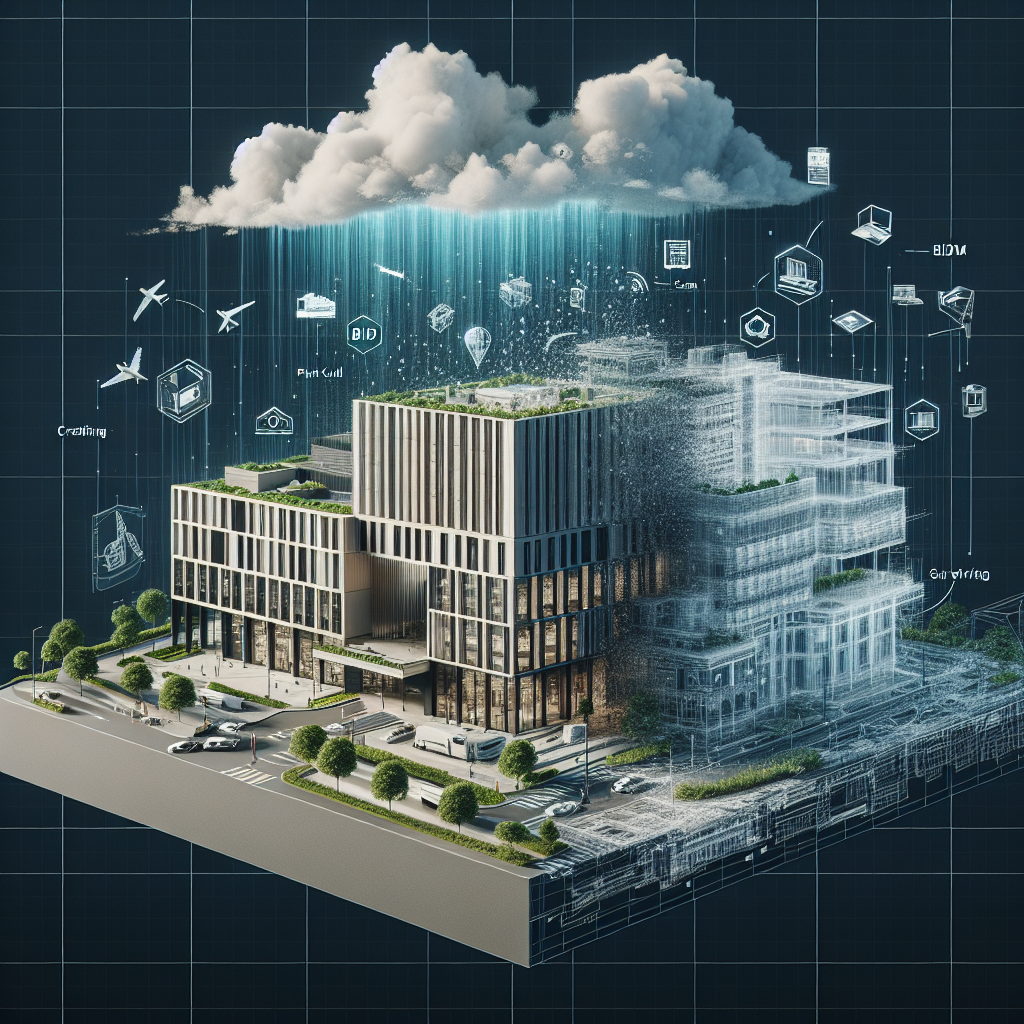
In an era demanding faster, smarter, and more resilient construction, converting physical site data into accurate digital models is no longer optional—it’s critical. LOD-Based Scan to BIM (Level of Development) represents a quantum leap beyond traditional point cloud processing, leveraging AI, robotics, and standardized protocols to transform chaotic reality-capture data into actionable, intelligent building information models. This methodology bridges the gap between the physical and digital worlds, enabling architects, BIM coordinators, and project managers to make informed decisions earlier, reduce costly rework, and optimize entire project lifecycles. For firms implementing solutions like those at arena-cad.com, integrating LOD-Based Scan to BIM workflows is becoming essential to stay competitive in today’s data-driven AEC landscape.
Understanding LOD-Based Scan to BIM Fundamentals
At its core, LOD-Based Scan to BIM is the systematic process of converting laser scans, photogrammetry, or other reality-capture outputs into BIM models structured according to predefined Level of Development specifications. Unlike generic point cloud modeling, this approach aligns each modeled component with specific LOD criteria—detailing elements like walls (LOD 200), MEP systems (LOD 300), or façade components (LOD 400)—ensuring digital representations accurately reflect real-world conditions at every stage. The process begins with high-density point cloud generation using terrestrial laser scanners (TLS) or photogrammetry, typically producing billions of data points in formats like .E57 or .RCP. AI-driven software then classifies these points into semantic objects (e.g., beams, ducts) before parametric modeling tools like Autodesk Revit or Bentley OpenBuildings transform them into intelligent, data-rich BIM elements. This structure ensures models evolve with project phases, from design validation (LOD 300) to as-built documentation (LOD 400), directly supporting the need for accurate clash detection and digital twins emphasized by industry leaders.
Achieving Unprecedented Data Accuracy and Efficiency
The primary advantage of LOD-Based Scan to BIM lies in its ability to drastically enhance data integrity and project efficiency. By integrating real-time scan data directly into BIM workflows, teams eliminate the costly errors inherent in manual measurement and traditional 2D documentation. Firms like Turner Construction are leveraging this approach with custom AI tools that analyze point clouds and schedules in real-time, as highlighted during the New York Build 2026 panel. For instance, Turner developed a solution using Anthropic’s Claude AI to evaluate project performance and visualize trade conflicts directly from scan data—identifying issues that might otherwise only surface during on-site installation. This AI-assisted modeling reduces design loops by pre-empting clashes and verifying compliance before construction begins. Moreover, robotics and automation accelerate the process; automated scanners capture data faster than manual methods, while AI algorithms process point clouds up to 10 times quicker than manual classification. The result is a significant reduction in rework—some studies report up to 30% lower change orders—along with compressed timelines and more predictable outcomes. For surveyors and reality-capture specialists, this means their data becomes a strategic asset rather than a deliverable, directly informing design and construction decisions through platforms accessible to all stakeholders via common data environments.
Overcoming Implementation Challenges Through Data Standardization
Despite its benefits, successful LOD-Based Scan to BIM adoption hinges on overcoming critical data and workflow hurdles. As noted at New York Build 2026, robots and AI tools “must be fed the right data and inserted into a process where it makes sense with teams’ existing workflows.” The most prevalent challenge is inconsistent data quality: poor scan resolution, incomplete coverage, or misaligned coordinate systems can render even sophisticated AI useless. Racel Amour, Head of Generative AI at Autodesk, stresses that “organizing your data with clear standards, such as consistent naming conventions and structured formats, will make it easier for AI to deliver value.” Solutions include:
- Centralized Data Management: Storing scans and models in a Common Data Environment (CDE) like Autodesk Construction Cloud or Trimble Connect ensures interoperability.
- Scan Protocol Standardization: Defining project-specific resolution requirements (e.g., 5mm accuracy for LOD 400 elements) and using standardized formats like IFC for model exchange.
- AI-Driven Validation: Implementing tools that automatically flag scan anomalies or model discrepancies, ensuring data meets LOD thresholds before processing.
Firms like arena-cad.com address these challenges through integrated workflows that combine reality capture, AI processing, and BIM modeling under one roof, enabling surveyors and BIM technicians to collaborate seamlessly. Additionally, training teams to understand LOD specifications—such as those defined by BIM Forum or ISO 19650—ensures models meet project requirements from concept to handover, turning data chaos into structured intelligence.
The Future: AI-Enhanced Flexibility and Resilience
As construction demands shift toward adaptability and resilience, LOD-Based Scan to BIM is evolving beyond documentation into a driver of innovation. The technology now supports “flexible features” that anticipate future changes, such as structural grids designed for expansion or utility corridors预留 for future connections—a critical factor in the rapidly changing manufacturing facilities highlighted by Dave Junge in IndustryWeek. Meta’s recent AI advancements for cement and concrete development further illustrate this trend, demonstrating how AI can optimize material performance and supply chain resilience. Looking ahead, integration with generative design tools will allow models to adapt to real-time constraints automatically while maintaining LOD integrity. For example, AI could scan an existing structure and propose compliant renovation options within BIM, considering materials, codes, and budgets simultaneously. Project managers will gain real-time dashboards comparing as-built scans against models using LOD compliance metrics, enabling predictive interventions. This evolution aligns perfectly with enginyring.com‘s focus on engineering solutions that merge digital precision with physical execution, ensuring facilities remain adaptable to technological and operational changes long after completion. The future belongs to firms that treat scan data not as static records, but as dynamic inputs for intelligent, responsive construction.
Practical Steps for Adopting LOD-Based Scan to BIM
- Define Project LOD Requirements: Establish clear LOD targets (200-400) for each discipline using BIM Forum guidelines.
- Invest in Integrated Hardware: Pair high-resolution scanners (Faro Focus S70, Leica RTC360) with AI-ready processing software.
- Implement Data Governance: Use CDEs with version control and enforce naming standards (e.g., “WALL-EXT-LOD300”).
- AI-Assisted Workflows: Test AI tools for automatic classification (e.g., Bentley ContextCapture, ReCap Pro AI).
- Cross-Team Training: Educate surveyors, BIM techs, and contractors on LOD interpretation and model usage.
LOD-Based Scan to BIM is redefining how construction data is transformed into actionable intelligence. By combining precision scanning with AI-driven modeling and standardized LOD protocols, firms can eliminate costly errors, accelerate timelines, and build structures that are not only accurate but also adaptable to future needs. As AI and robotics continue to mature, those who master this integration—leveraging platforms from leaders like arena-cad.com—will lead the charge toward a more efficient, resilient, and data-driven construction industry. The future belongs to those who can translate physical reality into digital certainty.