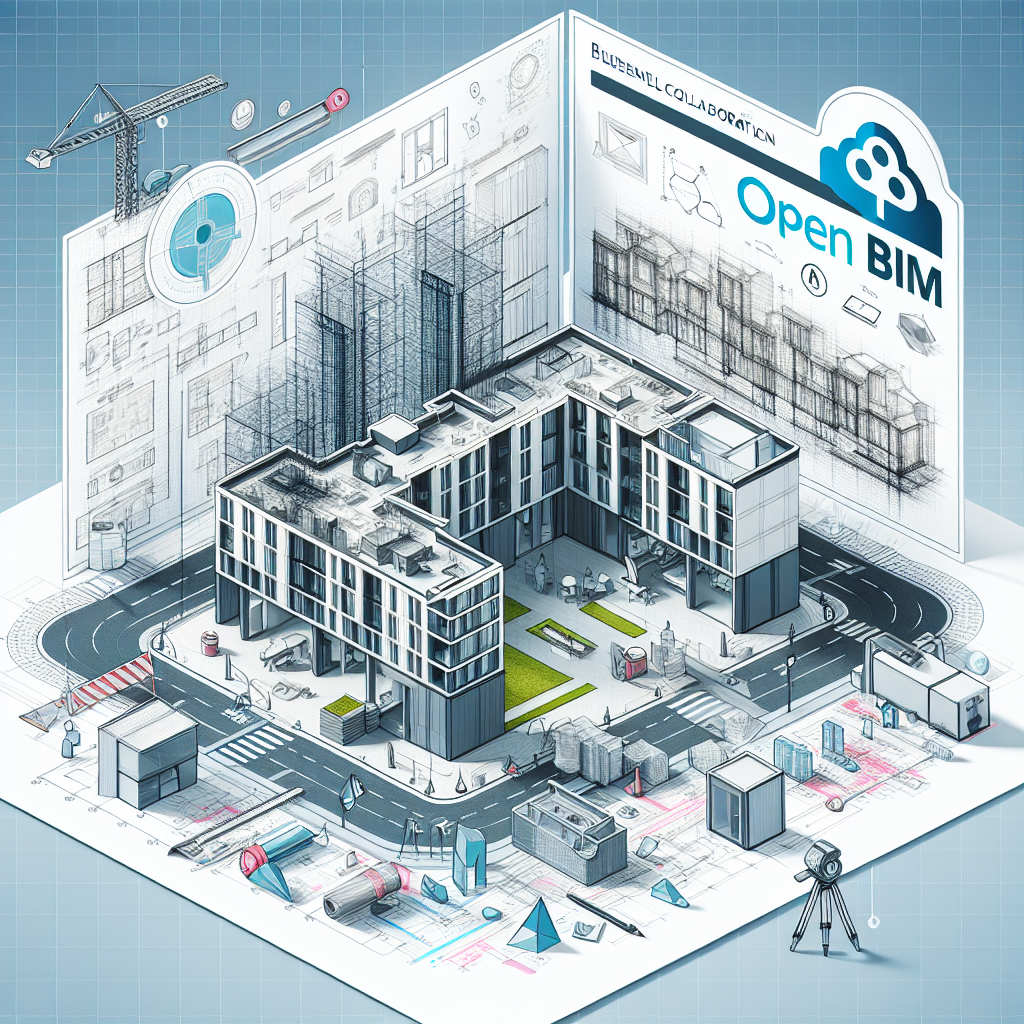
As AEC projects grow increasingly complex, interoperability remains a critical challenge for architecture, engineering, and construction teams. Fragmented data across proprietary software platforms often leads to rework, delays, and costly errors. OpenBIM—powered by Industry Foundation Classes (IFC) standards—emerges as a transformative solution, enabling seamless data exchange across the project lifecycle. For firms like those featured in Archinect’s LA job market, technical proficiency in open standards is becoming essential for junior professionals and project managers alike. This shift toward open, neutral data formats not only streamlines workflows but also unlocks new possibilities for integrated design, construction coordination, and long-term asset management.
The Evolution of BIM Interoperability
Early BIM workflows struggled with data silos, as proprietary formats like Autodesk Revit’s RVT or Bentley’s DGN limited cross-platform compatibility. Teams relied on manual file conversions or PDF exports, resulting in data loss and version conflicts. The introduction of IFC standards—developed by buildingSMART and supported by platforms like Autodesk—established a universal framework for exchanging BIM data. Unlike closed systems, IFC files (e.g., IFC2x3 or IFC4) preserve metadata, geometry, and relationships across software like Revit, Civil 3D, and Rhino. This evolution allows BIM coordinators to federate data from multiple tools without losing critical information. For example, Autodesk’s AEC Collection now enables direct IFC import/export, ensuring compatibility between CAD and BIM environments. As projects scale, adopting these open standards prevents data fragmentation and reduces coordination overhead.
How OpenBIM Standards Transform Collaboration
OpenBIM fundamentally alters how teams collaborate by creating a “common data environment” accessible across disciplines. By exchanging data via IFC files, architects, engineers, and contractors simultaneously access the same model, reducing clashes and RFIs. Autodesk Construction Cloud and other cloud-based platforms leverage this approach, enabling real-time document reviews and approval workflows. This interoperability extends to GIS integration: Esri’s ArcGIS Pro 3.4 now reads Revit 2020–2025 files and IFC datasets, allowing spatial analysis of BIM data within geospatial contexts. For surveyors and reality-capture specialists, this means merging point clouds with BIM models for precision tracking. Firms like Enginyring.com utilize openBIM to connect engineering teams with construction data, minimizing rework during coordination. The result is a cohesive workflow where high-fidelity data flows from design to operations, ensuring project goals remain aligned.
Practical Tools for OpenBIM Implementation
Leveraging openBIM requires specific tools and workflows to maximize efficiency. The Autodesk AEC Collection provides a integrated suite: Revit for BIM authoring, Civil 3D for infrastructure, and AutoCAD for drafting, all unified via IFC exchange. Teams can use Autodesk Docs as a cloud-based common data environment to manage versions and permissions. For enhanced interoperability, third-party plugins like those from the Autodesk App Store extend functionality—such as IFC validators or clash-detection tools. Esri’s ArcGIS Pro 3.4 further bridges CAD/BIM and GIS, enabling feature class representation of BIM data for holistic analysis. When implementing, prioritize IFC export settings (e.g., IFC4 with rich object properties) to maintain data integrity. Arena-cad.com often recommends starting with pilot projects to test these workflows before full-scale deployment, ensuring teams master the nuances of open data exchange.
Future-Proofing Projects with Open Data
OpenBIM’s greatest strength lies in its adaptability to emerging trends like digital twins and sustainability mandates. By storing data in IFC formats—instead of proprietary silos—projects support long-term monitoring and optimization throughout the asset lifecycle. For instance, buildingSMART’s openBIM definition emphasizes connecting “people, processes, and data” for operational efficiency. This becomes critical for carbon impact analysis and facility management, where historical data informs predictive models. Construction teams benefit from schedule simulations linked to BIM data, reducing on-site errors. As digital twins proliferate, openBIM ensures compatibility with future technologies, preventing obsolescence. Enginyring.com emphasizes this forward-thinking approach, advising clients to adopt openBIM early to avoid costly migrations. Ultimately, investing in interoperable standards today safeguards project value and resilience against evolving industry demands.
Practical Steps for Adopting OpenBIM
- Audit Current Workflows: Identify data bottlenecks in existing processes (e.g., manual file transfers).
- Standardize on IFC: Configure software (Revit, Civil 3D) to export IFC4 with full metadata.
- Implement a Common Data Environment: Use Autodesk Docs or similar platforms for centralized storage.
- Train Teams: Upskill BIM coordinators and CAD technicians in IFC validation and cross-platform workflows.
- Pilot Test: Run a small project using openBIM to refine processes before scaling.
By embracing openBIM, AEC professionals unlock unprecedented collaboration potential. This approach transforms fragmented data into a unified asset, driving efficiency from design to facility management. As the industry evolves, firms prioritizing interoperability will lead in innovation and project delivery.