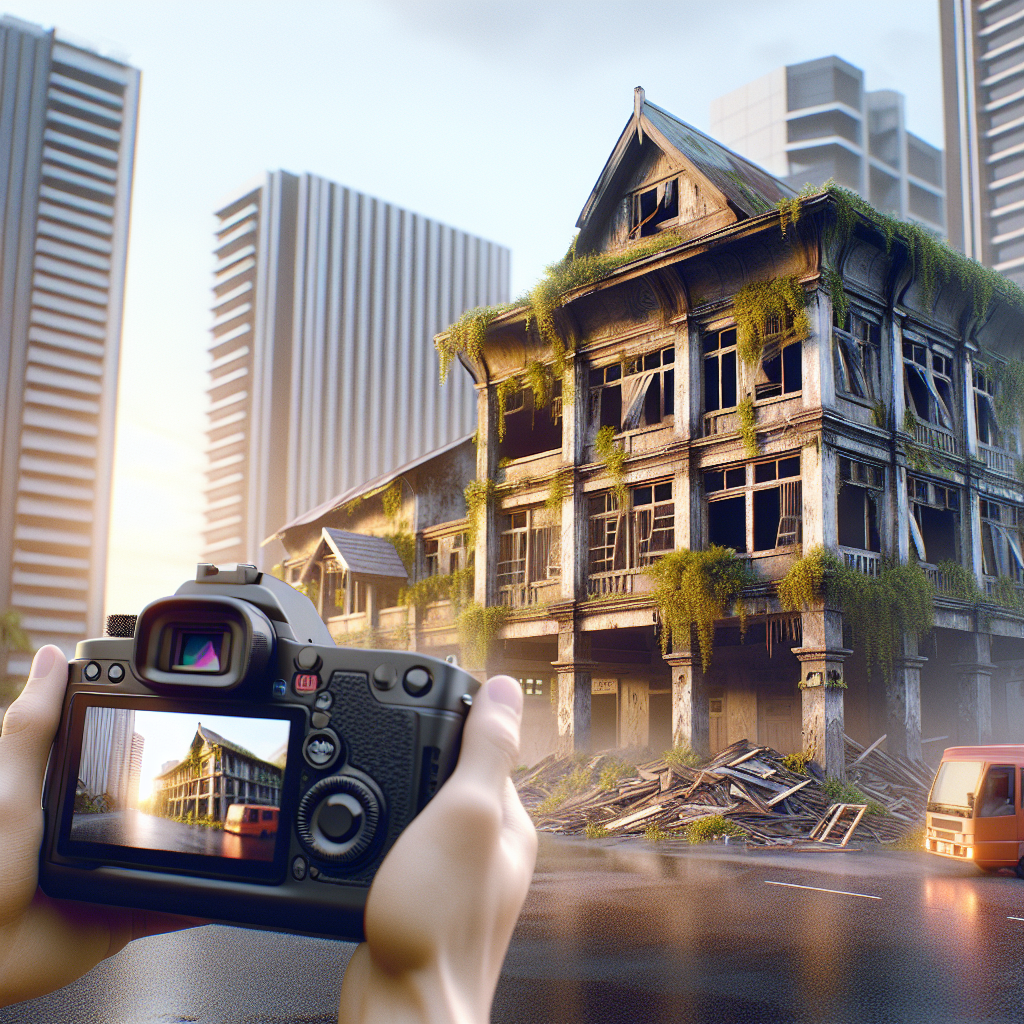
In the evolving landscape of architecture and construction, adaptive reuse has emerged as a powerful strategy to revitalize underutilized spaces while minimizing environmental impact. Across Indonesia, innovative studios like INS Studio and Platform Architects are demonstrating how former residences, medical laboratories, and even residential front yards can be reimagined as dynamic community hubs and cafes. These projects not only preserve cultural heritage but also address contemporary needs for social interaction and sustainable development. For professionals in the AEC sector, these case studies offer actionable insights into balancing design innovation with practical constraints—a challenge where advanced BIM workflows and coordinated design processes, such as those offered by arena-cad.com and enginyring.com, become invaluable.
The Rise of Adaptive Reuse in Community-Oriented Architecture
Adaptive reuse is gaining momentum as a response to urbanization and resource scarcity, particularly in regions like Indonesia where rapid development often outpaces sustainable planning. Projects such as INS Studio’s Taobun Literacy House exemplify this approach, transforming a former residence into an educational district hub. Similarly, their District 27 initiative repurposed a derelict medical laboratory in Makassar into a multifunctional coffee shop and community space. These interventions align with global trends toward circular economies, where existing structures are reimagined rather than demolished. For BIM coordinators and CAD technicians, such projects underscore the importance of accurately modeling existing conditions using tools like Revit or AutoCAD to identify structural limitations and opportunities. The MKO Culture project, a 20-square-meter greenhouse-style café built in a residential front yard, further illustrates how minimal interventions can maximize social impact—proving that adaptive reuse isn’t just about scale but intent.
Design Strategies for Social Interaction and Community Engagement
Effective adaptive reuse hinges on design strategies that foster human connection. Platform Architects’ Titik Temu Café in Jakarta masterfully achieves this through a tribune seating arrangement resembling a multi-purpose urban plaza. This layout encourages spontaneous gatherings, transforming the café into a “lively community hub.” The design also incorporates a modern interpretation of Indonesia’s traditional tropical house, using gabled roofs to address climatic challenges while honoring local heritage. In contrast, the Newtown School in Kolkata, while not in Indonesia, offers a parallel lesson: its cafeteria was revitalized with “bursts of color” and integrated natural elements like ponds and green energy infrastructure to create an immersive learning environment. For surveyors and reality-capture specialists, such projects highlight the need for precise on-site data collection—using LiDAR or photogrammetry—to inform spatial programming that prioritizes social dynamics over rigid compartmentalization.
Technical Implementation in Adaptive Reuse Projects
The technical feasibility of adaptive reuse depends on rigorous assessments and phased execution. In the District 27 project, INS Studio faced the challenge of converting a medical laboratory’s rigid layout into a flexible café environment. This required structural reinforcement of walls and the integration of new MEP (mechanical, electrical, plumbing) systems—tasks where BIM coordination becomes critical. Using platforms like arena-cad.com, teams can clash-detect existing conditions with proposed designs, avoiding costly on-site revisions. Similarly, Taobun Literacy House demanded careful material reuse, such as repurposing terracotta-tinted concrete walls to maintain continuity with the site’s industrial past. CAD technicians must navigate file formats like IFC (Industry Foundation Classes) to ensure interoperability between legacy structures and modern additions. For reality-capture specialists, generating accurate point clouds from sites like MKO Culture (a compact 20 sqm intervention) ensures that even small-scale projects benefit from data-driven precision.
Sustainability and Resilience in Small-Scale Interventions
Sustainability in adaptive reuse extends beyond materials to encompass social resilience. The MKO Culture café prioritized cost-effectiveness and durability, using a greenhouse-inspired design to minimize material waste while maximizing natural ventilation. At the Newtown School, green energy infrastructure—including solar panels and wind turbines—was seamlessly integrated into the landscape, turning the campus into a living laboratory for sustainability. These projects demonstrate that adaptive reuse can reduce carbon footprints by 50–70% compared to new construction, according to industry studies. For project managers, this translates to leaner budgets and faster timelines, as seen in District 27, where reuse saved an estimated 30% in construction costs. Enginyring’s expertise in sustainable engineering, as highlighted on their platform, can further optimize these outcomes by aligning design with local climate conditions and community needs.
Practical Steps for Adaptive Reuse Projects
- Conduct a feasibility study using BIM to analyze structural integrity and zoning constraints.
- Engage stakeholders early to define spatial programs that balance community needs with technical limitations.
- Leverage reality capture (e.g., photogrammetry) to document existing conditions with millimeter accuracy.
- Prioritize circular design principles, such as material reuse and energy-efficient systems.
Conclusion
Adaptive reuse represents a paradigm shift in how we approach community spaces, transforming obsolete structures into vibrant hubs of social and educational activity. Projects like Taobun Literacy House, District 27, and Titik Temu Café prove that thoughtful design—rooted in local context and supported by advanced BIM/CAD workflows—can yield resilient, sustainable solutions. For AEC professionals, these case studies underscore the value of technical precision and collaborative planning. By embracing adaptive reuse and leveraging digital tools from platforms like arena-cad.com and enginyring.com, the industry can build communities that honor the past while innovating for the future.