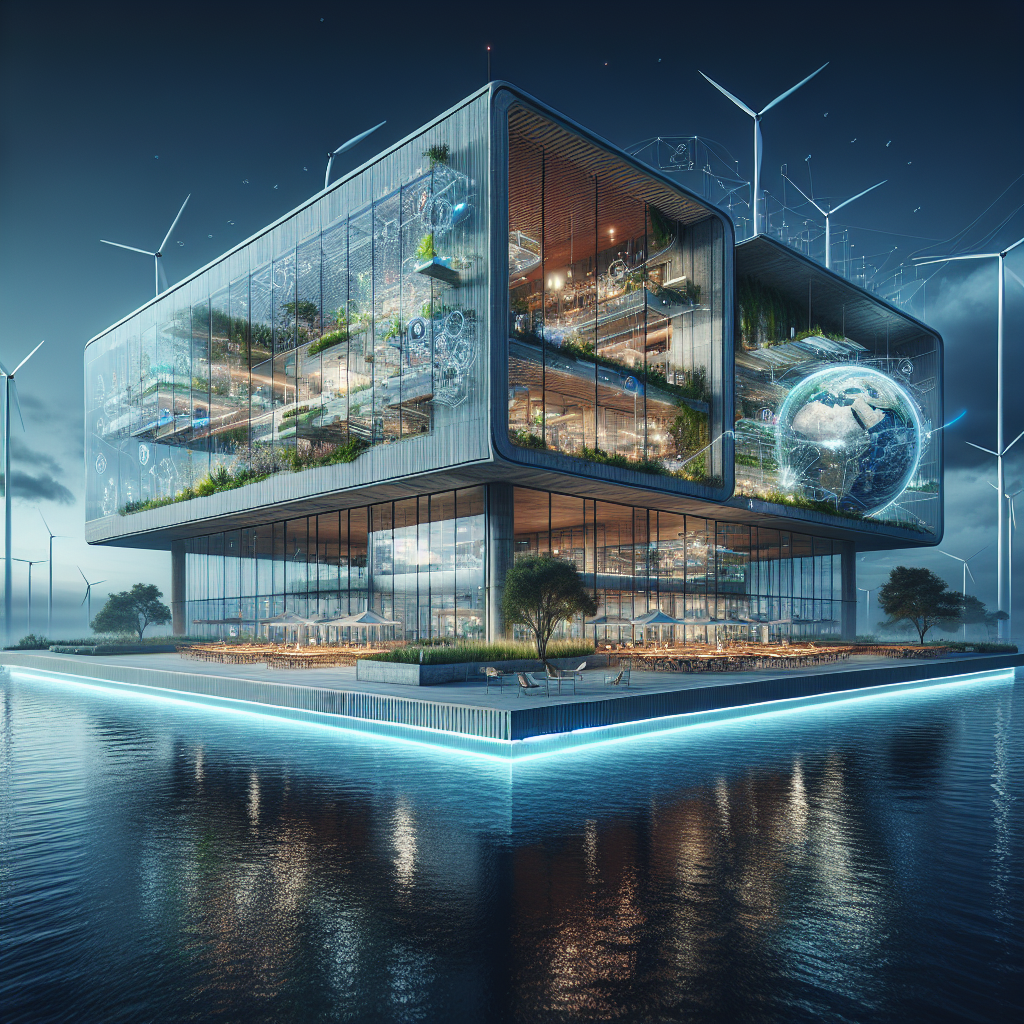
The Architecture at Zero 2026 competition, presented by the American Institute of Architects California (AIA CA), presents a compelling challenge for design professionals and students: envisioning La Plaza, a year-round educational and cultural center in Antelope Valley, California, that seamlessly transforms into a critical Emergency Operations Center during regional disasters. With the deadline set for June 1, 2026, this globally accessible initiative pushes the boundaries of sustainable design, demanding innovative solutions that integrate decarbonization, resilience, and equity principles. For architects, BIM coordinators, engineers, and project managers participating in or observing this event, understanding its unique requirements and opportunities is crucial. This competition serves as a significant platform for showcasing advanced design thinking within the AEC sector, aligning closely with the integrated workflows championed by platforms like Enginyring and specialized CAD/BIM services from Arena CAD.
Understanding the Architecture at Zero 2026 Challenge
The core mandate for the 2026 iteration of Architecture at Zero is the design of La Plaza, situated in Antelope Valley, California. This facility must function effectively as a vibrant educational and cultural hub during normal operations. However, its defining characteristic is its ability to pivot rapidly into a multi-agency Emergency Operations Center (EOC) during regional emergencies. This dual purpose is paramount. As an EOC, La Plaza must provide critical support for evacuees and become a command center for first responders and multi-agency coordination. The competition explicitly emphasizes three pillars: decarbonization, equity, and resilience. Decarbonization necessitates net-zero operational energy strategies, equity requires inclusive design accessible to all community members, and resilience demands robust structural and operational performance under extreme stress, such as wildfires or seismic events common in California. Funded by California utility customers and administered by SCE, SoCal Gas, and PG&E under the California Public Utilities Commission, this competition carries significant weight and offers substantial prize money ($25,000 total) judged by an international panel.
Technical Requirements and Software Considerations
Participants must navigate specific technical constraints when developing their design concepts for La Plaza. Crucially, no CAD files are provided for the site. Teams are required to develop their own base plans from the available competition materials on the Architecture at Zero website. This underscores the importance of initial survey data interpretation and site analysis capabilities. While the competition is an “ideas competition,” meaning final renderings and detailed documentation aren’t mandated at the entry stage, teams must still substantiate their concepts with clear technical reasoning.
The choice of design software becomes a critical consideration. While AutoCAD remains a powerful tool for precise 2D drafting and detailed construction documentation, its capabilities for integrated design analysis and dynamic model updates are limited. For a project like La Plaza, which demands rigorous energy modeling for decarbonization and spatial analysis for multi-functional use, Revit and other BIM (Building Information Modeling) platforms offer distinct advantages. Revit’s parametric modeling ensures that changes in one view (e.g., floor plan) automatically update all related views, sections, elevations, and schedules. This coordination is vital when designing a space that must transform functionally, ensuring structural MEP (Mechanical, Electrical, Plumbing) systems don’t conflict with rapid reconfiguration needs. Teams leveraging BIM tools can more effectively integrate sustainability analysis plugins (for energy modeling, daylighting, and material lifecycle assessment) and simulate emergency response workflows, aligning perfectly with the competition’s goals. Services from Arena CAD often include specialized Revit training and BIM workflow optimization, which could be invaluable for teams aiming to maximize efficiency in this complex design challenge.
Judging Criteria and Focus Areas
The competition entries will be evaluated against a set of rigorous criteria focused on the three core pillars:
- Decarbonization: Designs must demonstrate a credible path to achieving net-zero operational energy, encompassing strategies for building envelope optimization, high-efficiency systems, integration of renewables (likely solar given California’s incentives), and embodied carbon reduction through material selection and construction methods.
- Equity: The design must prioritize inclusivity and accessibility. This involves ensuring physical access for all abilities, culturally appropriate programming spaces, consideration of diverse community needs, and equitable access to the facility’s educational and emergency services regardless of socioeconomic background. The site context in Antelope Valley also requires addressing specific community demographics.
- Resilience: The structure must be designed to withstand regional environmental hazards (potentially high winds, seismic activity, wildfire proximity) and function reliably as an EOC during emergencies. This includes robust structural systems, redundant critical infrastructure, clear emergency egress, adaptable spatial layouts, and integration with regional emergency management plans.
The jury, comprising international experts, will assess how effectively these criteria are addressed holistically within the design concept. While innovation is encouraged, as noted in the FAQs, simply adding new ideas doesn’t guarantee higher scores; the integration and practical application of these principles within the specific site and program constraints are paramount. Teams must clearly articulate their strategies for each pillar, providing logical justification for their design decisions. Enginyring’s expertise in BIM coordination and project management could be particularly relevant here, ensuring that complex systems and operational requirements are clearly communicated and coordinated within the submission.
Opportunities and Professional Development
Participating in Architecture at Zero offers substantial benefits beyond potential prize money. For students, it provides an unparalleled platform to tackle a real-world complex problem, gain exposure to industry leaders on the jury, and network with peers and mentors. A significant incentive is the offer of free admission to the prestigious AIA Conference on Architecture in San Diego for student entrants. For professionals, the competition offers a high-profile opportunity to showcase innovative sustainable design solutions to a wide audience, including potential clients and employers. The focus on decarbonization and resilience aligns with growing industry demands and regulatory pressures globally, making participation a valuable addition to a portfolio. The experience gained in integrating multiple performance goals (energy, equity, disaster response) into a single design is highly transferable to future projects. Furthermore, the competition fosters cross-disciplinary collaboration, bringing together architects, engineers, planners, and sustainability experts – a reflection of modern integrated project delivery approaches that Enginyring facilitates.
Practical Steps for Entry
- Register Immediately: Sign up on the official Architecture at Zero 2026 website (www.architectureatzero.com) to receive all updates and gain access to the submission portal. Create your required username.
- Thoroughly Review Materials: Download and meticulously study all competition documents, including the site information, program requirements, rules, and submission guidelines available on the website.
- Form Your Team: Assemble a multidisciplinary team if possible, incorporating expertise in architecture, structural engineering, MEP systems, sustainability, and emergency planning if applicable. Note that academic consultants should be listed as such, not teammates.
- Develop Your Design Concept: Focus on integrating decarbonization, equity, and resilience seamlessly. Sketch initial ideas, then move into digital modeling (considering Revit or AutoCAD based on your team’s strengths and the project’s needs).
- Prepare Your Submission Package: Compile all required deliverables – typically concept drawings, renderings, sustainability analysis summaries, and a concise project narrative – strictly adhering to the specified digital formats and file size limits outlined in the submission instructions accessible via your portal account. Ensure all student eligibility proof is ready if applicable.
- Submit Before Deadline: Upload your complete entry well before the June 1, 2026, 01:00 PST deadline to avoid last-minute technical issues. Double-check all components are included correctly.
Conclusion
The Architecture at Zero 2026 competition represents a critical juncture for the AEC industry, pushing designers to create solutions that are not only architecturally compelling but also environmentally responsible, socially equitable, and operationally resilient. The challenge of La Plaza – a facility that serves the community daily and transforms into a lifeline during emergencies – demands innovative thinking and technical rigor. As the June 1, 2026 deadline approaches, professionals and students have a unique opportunity to contribute to the future of sustainable and resilient design while gaining significant visibility and experience. Leveraging the right tools, like Revit for integrated BIM workflows supported by specialists like Arena CAD, and understanding the nuanced judging criteria will be key to success. This competition is more than a contest; it’s a call to action to design a more sustainable and equitable built environment for the challenges of today and tomorrow.