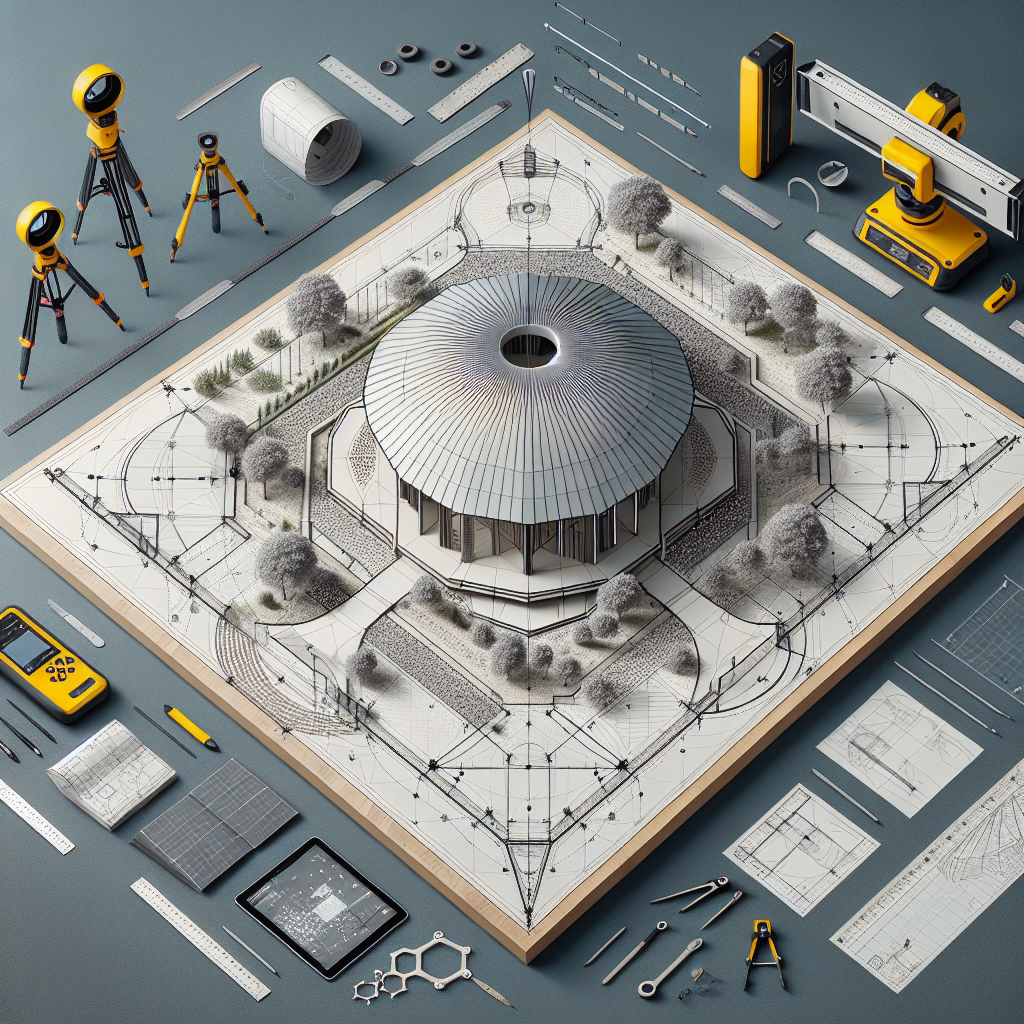
The AEC industry’s sustainability focus is expanding beyond energy-efficient operations to encompass the entire lifecycle of a structure, including its eventual disassembly. A compelling case study is Spain’s pavilion for World Design Capital Frankfurt Rhein-Main 2026, a project explicitly designed for reversibility and circularity. This lightweight structure, which will activate the garden of the Cervantes Institute, is not merely a temporary installation but a prototype for future cultural infrastructure. It directly challenges conventional construction paradigms by prioritizing design for disassembly (DfD) and material reutilization from the outset. For BIM coordinators, architects, and project managers, this project underscores a critical evolution: the digital tools used to design and construct must now also plan for a building’s end-of-life. This shift requires a deeper integration of BIM methodologies, precise material data, and collaborative workflows that extend a project’s value far beyond its initial completion.
From Gaudí’s Catenary Models to Parametric BIM: Designing for Assembly and Disassembly
The pavilion draws explicit inspiration from Antoni Gaudí’s architectural methods, known for their structural logic and material efficiency. Where Gaudí used physical hanging chain models to derive optimal compression forms, contemporary architects use parametric BIM software like Autodesk Revit or Rhino with Grasshopper. This digital approach allows for the precise definition of complex geometries while embedding crucial data for fabrication and, importantly, future disassembly. For a reversible structure, every connection and component must be meticulously planned. BIM becomes the central platform for this planning, enabling teams to simulate the assembly sequence and, in reverse, the deconstruction process. This ensures that the design intent for circularity is feasible, safe, and efficient. At firms like ENGINYRING.com, which provide detailed architectural and structural BIM services, applying these principles means creating models that are not just coordination tools but comprehensive logistical manuals for a building’s entire lifespan.
Material Passports and the BIM Asset Library: Tracking Value for Circularity
A core tenet of the circular economy is maintaining the value of materials and products for as long as possible. The Frankfurt pavilion exemplifies this through its focus on material reutilization. To enable this in practice, the industry is adopting the concept of “material passports”—digital datasets that record the origin, composition, and condition of building components. BIM is the natural home for this information. A well-structured BIM model, especially one developed for projects with circular ambitions, functions as a dynamic asset library. Each element can be tagged with data specifying its manufacturer, material composition (e.g., specific steel grade or timber treatment), disassembly instructions, and potential for reuse or recycling. This transforms the BIM model from a static representation into a living document of embodied resources. For surveyors and reality-capture specialists, this creates a new role: verifying as-built conditions and updating these passports throughout the building’s life, ensuring the data remains accurate for its eventual disassembly.
Digital Twins for Reversible Infrastructure: Managing Lifecycle and Logistics
The concept of a reversible cultural pavilion pushes the digital twin beyond operational facility management into lifecycle logistics. A digital twin fed by the as-built BIM model and real-time sensor data can monitor structural health, environmental conditions, and component wear. For a temporary or adaptable structure, this data is invaluable for planning its next phase—whether that’s relocation, storage, or material harvesting. Project managers can use this integrated digital view to make informed decisions about maintenance schedules and future deployment. The precision required for such reversible construction also benefits from reality-capture technologies like laser scanning, which can verify that the physical assembly matches the digital plan precisely, ensuring all designed-for disconnections remain accessible and functional. This level of digital-physical integration is where the AEC industry is headed, and service providers like those at arena-cad.com are at the forefront, offering the BIM and surveying expertise to turn this vision into a manageable process.
Practical Steps for Implementing Reversible Design in Your BIM Workflow
- Adopt Parametric Design Early: Use BIM and parametric tools from the conceptual stage to define geometries that are both structurally sound and logically assembled/disassembled.
- Structure Your BIM Library for Circularity: Create and enforce standards for embedding material passport data (manufacturer, composition, reuse potential) into every BIM family and component.
- Simulate the Lifecycle: Leverage BIM coordination and 4D scheduling tools to digitally rehearse both the construction and deconstruction sequences, identifying potential clashes or safety issues.
- Integrate Reality Capture: Use 3D laser scanning during and after construction to create an accurate as-built digital twin, verifying that reversible connections are installed correctly and documenting them for future teams.
- Foster Early Collaboration: Engage contractors, fabricators, and waste management specialists early in the design process. Their input is critical for ensuring that DfD strategies are practical and cost-effective.
The Spain pavilion for Frankfurt 2026 is more than a cultural statement; it is a technical manifesto for the future of the AEC industry. It demonstrates that the principles of circularity and reversibility are not constraints but catalysts for innovation, demanding greater precision, data richness, and foresight in our digital tools. By evolving our BIM practices to encompass the entire lifecycle—from parametric design for disassembly to digital twins managing material passports—we can build not just for permanence, but for purposeful adaptability. This project is a clear signal that the most sustainable building may be the one designed to leave no trace, and the digital thread woven through BIM is what makes that possible.