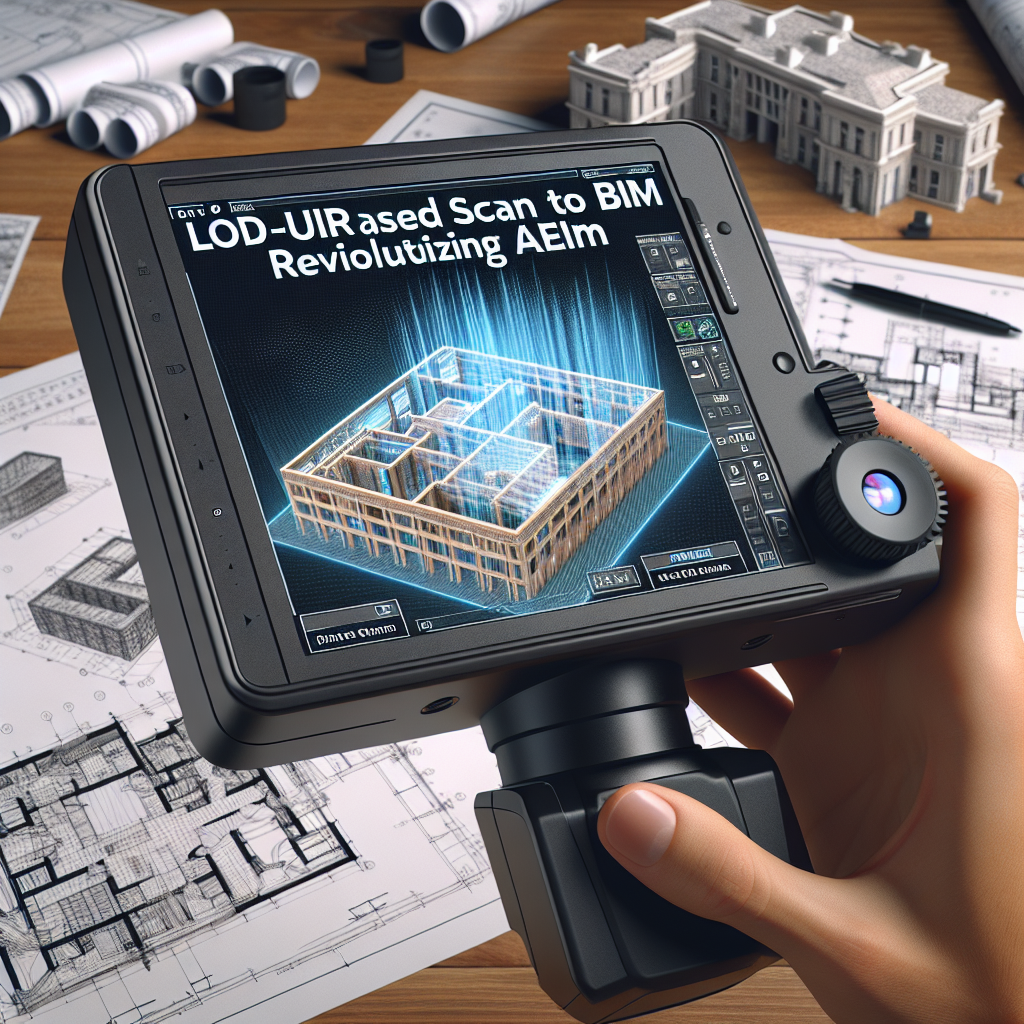
In an industry where digital twins and data-driven decisions are reshaping construction workflows, LOD-Based Scan to BIM has emerged as a critical bridge between physical sites and intelligent models. This advanced methodology integrates point cloud data from reality capture technologies with Building Information Modeling to create geometrically precise as-built representations. By defining clear Levels of Development (LOD) specifications throughout the process, teams ensure alignment between scanned conditions and model fidelity. As labor shortages persist and project complexity escalates, this approach not only enhances documentation accuracy but also automates repetitive modeling tasks, freeing skilled professionals for high-value engineering decisions. Forward-thinking firms leveraging this technique are already delivering retrofit projects with 30% fewer on-site conflicts and seismic risk assessments with unprecedented granularity.
The Science of LOD-Based Scan to BIM
LOD-Based Scan to BIM operates on a structured framework where scan-to-model transitions follow predefined LOD criteria (LOD 200 to LOD 500) established by industry standards like BIMForum. Reality capture specialists first deploy terrestrial laser scanners (TLS) or photogrammetry to generate point clouds with accuracy tolerances of ±1-3mm. These datasets are then processed in specialized software—such as Leica Cyclone or Autodesk ReCap—to filter noise and segment structural elements. The key differentiation lies in applying LOD-specific modeling rules: LOD 200 may represent structural frames as simplified extrusions, while LOD 400 captures MEP penetrations with exact component specifications. This granular control ensures models maintain traceability from scan data to final BIM deliverables, enabling clash detection at the earliest stages. For projects requiring historical preservation, such as retrofits of heritage buildings, this technique allows reconstruction of complex geometries without manual measurement errors.
Enhancing Documentation and Clash Mitigation
The integration of scan data with BIM eliminates traditional “as-built vs. design” discrepancies that cause rework and delays. When executed with LOD precision, models serve as virtual twins reflecting actual site conditions, allowing BIM coordinators to validate designs against reality using tools like Navisworks Manage. A study of hospital renovations showed that LOD 400+ scan-to-BIM reduced RFIs by 45% by identifying MEP conflicts during the pre-construction phase. This process also generates precise fabrication drawings, enabling off-site prefabrication in facilities equipped with CNC machinery. For example, structural steel elements modeled at LOD 400 can be directly imported into Tekla Structures for automated detailing. Additionally, the approach supports asset tagging, where as-built conditions from scans populate BIM with real-world metadata such as material properties and installation dates. This creates a digital record that extends beyond construction into facility management phases, aligning with ISO 19650 compliance requirements.
Addressing Labor Challenges Through Automation
As the industry grapples with a BIM skills shortage—where 67% of firms report difficulty hiring experienced modelers—LOD-based automation offers a strategic solution. By automating routine tasks like point cloud classification and geometry creation, this methodology reduces manual modeling time by up to 50%. Skilled technicians can then focus on complex assignments such as seismic modeling or energy analysis. For instance, ENGINYRING’s Scan to BIM workflow uses proprietary algorithms to automate LOD 300 structural modeling from point clouds, allowing their teams to prioritize value-added engineering tasks. This shift counters the “catch-22” where limited training opportunities perpetuate skill gaps, as identified by Diasphere’s CEO. Companies implementing in-house LOD-based training programs, like those recommended by ARENA-CAD’s BIM management courses, report faster onboarding times and reduced dependency on external consultants. The automation also mitigates human error in critical tasks such as utility mapping, where misinterpretations of scan data can lead to safety hazards.
Enabling Safer Urban Planning and Retrofitting
LOD-Based Scan to BIM provides unprecedented insights for urban resilience planning. Seismic modeling studies leverage high-LOD as-built models to assess building vulnerabilities with finite element analysis (FEA) software like SAP2000. These models incorporate material properties derived from scan data, revealing structural weaknesses that might be missed in traditional surveys. In seismic retrofitting projects, this technique enables simulation of reinforced concrete behavior under stress, guiding targeted reinforcement strategies. For instance, a retrofit of a 1960s office building used LOD 500 models to identify non-structural partition walls contributing to seismic mass, reducing retrofit costs by 22%. The methodology also supports smart city initiatives by integrating as-built data with GIS platforms, enabling infrastructure managers to monitor aging assets like bridges and pipelines. By combining reality capture with BIM, cities can create digital inventories that inform maintenance schedules and hazard mitigation plans, aligning with resilience frameworks like the UN Sendai Protocol.
Practical Implementation Steps
- Define LOD Scope: Establish project-specific LOD targets (e.g., LOD 400 for façades, LOD 200 for landscaping) using BIMForum guidelines.
- Calibrate Capture Equipment: Verify TLS accuracy to ±1mm and ensure scan density meets minimum point cloud requirements (e.g., 25 points/m² for LOD 300).
- Automate Classification: Apply machine learning tools (e.g., CloudCompare plugins) to segment structural, MEP, and architectural elements.
- Validate with Cross-Check: Use VR tools like Immersive Project Review to overlay models against scans during QC.
- Integrate with Asset Management: Populate BIM with as-built metadata for lifecycle compliance using FM:Systems integration.
Conclusion: LOD-Based Scan to BIM is no longer an emerging trend but a fundamental shift in how AEC professionals reconcile digital design with physical reality. By embedding precision into every modeling phase, this technique redefines quality control, accelerates delivery timelines, and unlocks data-driven decision-making for retrofit and urban resilience projects. As reality capture technologies evolve—particularly through LiDAR advancements and AI-driven point cloud processing—the synergy between scan data and BIM will deepen. Firms investing in this methodology today position themselves to address industry challenges head-on, transforming labor constraints into opportunities for innovation. The future belongs to those who can turn physical spaces into intelligent, actionable data—and LOD-based workflows are the key to unlocking that potential.