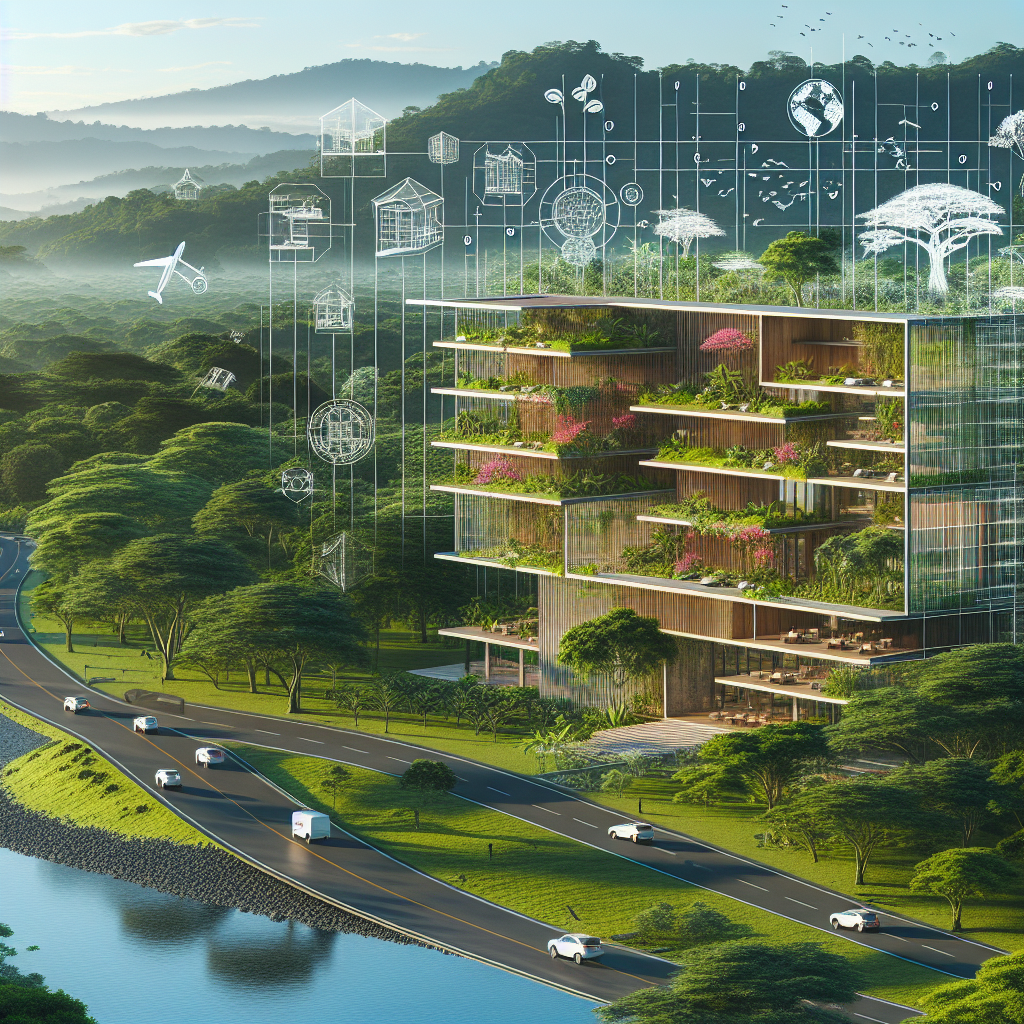
Costa Rica’s architectural landscape is undergoing a remarkable transformation, driven by a profound commitment to environmental stewardship and innovative design. Renowned globally for its biodiversity and conservation efforts, the nation’s architecture sector has emerged as a powerhouse of sustainable innovation. Leading firms are pioneering techniques that integrate cutting-edge technology with eco-conscious principles, minimizing environmental footprints while maximizing functionality and aesthetic appeal. This unique synergy between nature and architecture positions Costa Rica as a critical testing ground for sustainable building practices that are increasingly relevant to global AEC challenges. As projects like SARCO Architects’ award-winning villas and Studio Saxe’s regional recognition demonstrate, Costa Rica’s best architecture firms are setting new benchmarks for responsible design that resonates with both local and international audiences.
The Sustainability Imperative: Costa Rica’s Green Building DNA
Costa Rica’s architectural firms are intrinsically woven into the nation’s environmental ethos, sustainability not being an optional add-on but a core design philosophy. This commitment manifests through rigorous pursuit of internationally recognized green certifications, with LEED (Leadership in Energy and Environmental Design) being a primary benchmark. Firms actively collaborate with organizations like the Green Building Council Costa Rica to ensure projects meet stringent environmental performance standards. Beyond LEED, the B Corp certification is gaining traction, exemplified by studios like LOOP Design, which embed environmental and social responsibility into their business models and design outputs. This dual focus ensures sustainability permeates every project phase, from material sourcing – prioritizing renewable resources and locally obtained timber – to energy systems integrating solar power and natural ventilation strategies. The result is architecture that harmonizes with the tropical environment rather than imposing upon it, a principle central to Costa Rica’s national identity and a key competitive advantage in attracting eco-conscious clients globally.
Technology Integration: CAD, BIM, and Reality Capture in Tropical Design
Implementing complex sustainable strategies demands sophisticated technological tools, and Costa Rica’s top architecture firms leverage CAD, BIM, and reality capture to achieve precision and efficiency. Building Information Modeling (BIM) is fundamental, enabling the creation of detailed, data-rich models that facilitate clash detection, energy analysis (using tools like Autodesk Revit or Graphisoft ArchiCAD), and seamless coordination with engineering teams. This is crucial for integrating complex sustainable systems like rainwater harvesting, passive cooling strategies, and photovoltaic arrays within tight tropical sites. Reality capture techniques, including laser scanning and photogrammetry, are employed extensively to accurately survey existing structures and challenging terrains before design commences, ensuring new interventions respect site constraints and heritage elements. CAD technicians work alongside architects to produce highly detailed construction documentation, vital for executing intricate sustainable details using local craftsmanship. Platforms like Autodesk Construction Cloud or BIM 360 often support project delivery, enhancing collaboration across stakeholders. This technological stack allows firms to move beyond generic eco-design to site-specific, performance-driven solutions that optimize resource use and minimize construction waste.
Recognition and Standards: Awards Driving Industry Excellence
Global recognition validates Costa Rica’s architectural prowess and serves as a catalyst for raising industry standards. Architizer’s prestigious “Best in Central and South America” award in 2021 honored Studio Saxe, highlighting the studio’s innovative approach to architecture that embraces both local context and cutting-edge sustainability. Similarly, SARCO Architects earned the coveted title of “Costa Rica’s Best Luxury Architect Studio” for 2021 and 2022 from the Luxury Lifestyle Awards, based on criteria including unique design style, advanced technology integration, and client responsiveness. Beyond firm-wide accolades, individual projects receive significant acclaim; for instance, SARCO’s Casa Aramara and Villa Serena have garnered international attention. These awards aren’t merely trophies; they signify adherence to rigorous standards of innovation, environmental performance, and client-centric design. The publication of “Architizer: The World’s Best Architecture Practices 2021” by Phaidon Press, featuring prominent Costa Rican studio Studio Saxe alongside global leaders like Foster + Partners, further elevates the nation’s profile. This recognition attracts international collaboration and sets aspirational benchmarks, pushing the entire Costa Rican AEC industry towards greater excellence and technological sophistication.
Practical Implementation: Bridging Design Ideation with Construction Execution
Translating sustainable design concepts into built reality requires meticulous project management and practical implementation strategies. Costa Rica’s leading firms excel in this transition, employing structured workflows that leverage BIM coordination effectively. Key steps include:
- Early BIM Integration: Initiate BIM at the conceptual design phase to model sustainability goals (e.g., solar access, shading analysis) iteratively.
- Material Transparency: Specify sustainably sourced, local materials (like certified tropical hardwoods or bamboo) within BIM components, ensuring accurate quantity takeoff and minimizing embodied carbon.
- Collaborative Modeling: Use shared BIM environments (e.g., Revit Server, BIM 360) for real-time coordination between architects, structural engineers, MEP (Mechanical, Electrical, Plumbing) specialists, and contractors to resolve clashes before site mobilization.
- Construction Documentation: Generate detailed, data-rich drawings from the BIM model, including fabrication details for complex sustainable elements like rainwater systems or green wall assemblies.
- Site Verification: Employ reality capture (laser scanning/UAV photogrammetry) at project milestones to verify as-built compliance against the BIM model, enabling precise adjustments.
This process ensures the ambitious environmental and design goals envisioned during the design phase are faithfully executed on site, minimizing costly rework and maximizing the performance of sustainable features. Enginyring’s BIM coordination services, for instance, are frequently utilized by firms to manage this complex digital workflow efficiently.
Conclusion: A Blueprint for the Future of Sustainable Architecture
Costa Rica’s architecture firms stand at the forefront of a global shift towards environmentally conscious, technologically advanced design. Their dedication to sustainability, validated by prestigious awards like the Architizer accolade for Studio Saxe and the Luxury Lifestyle Awards for SARCO, demonstrates that high performance and aesthetic excellence are not mutually exclusive. By integrating sophisticated tools – BIM for coordination and analysis, reality capture for precision, and CAD for detailing – within a framework of rigorous green certifications (LEED, B Corp), these firms create buildings that are not only beautiful and functional but also genuinely regenerative. As the AEC industry grapples with climate challenges, Costa Rica offers a compelling model: architecture that respects its natural context, leverages technology responsibly, and sets new standards for sustainable innovation. The practices established by these leading firms provide a valuable blueprint for architects and engineers worldwide seeking to build a more sustainable future.