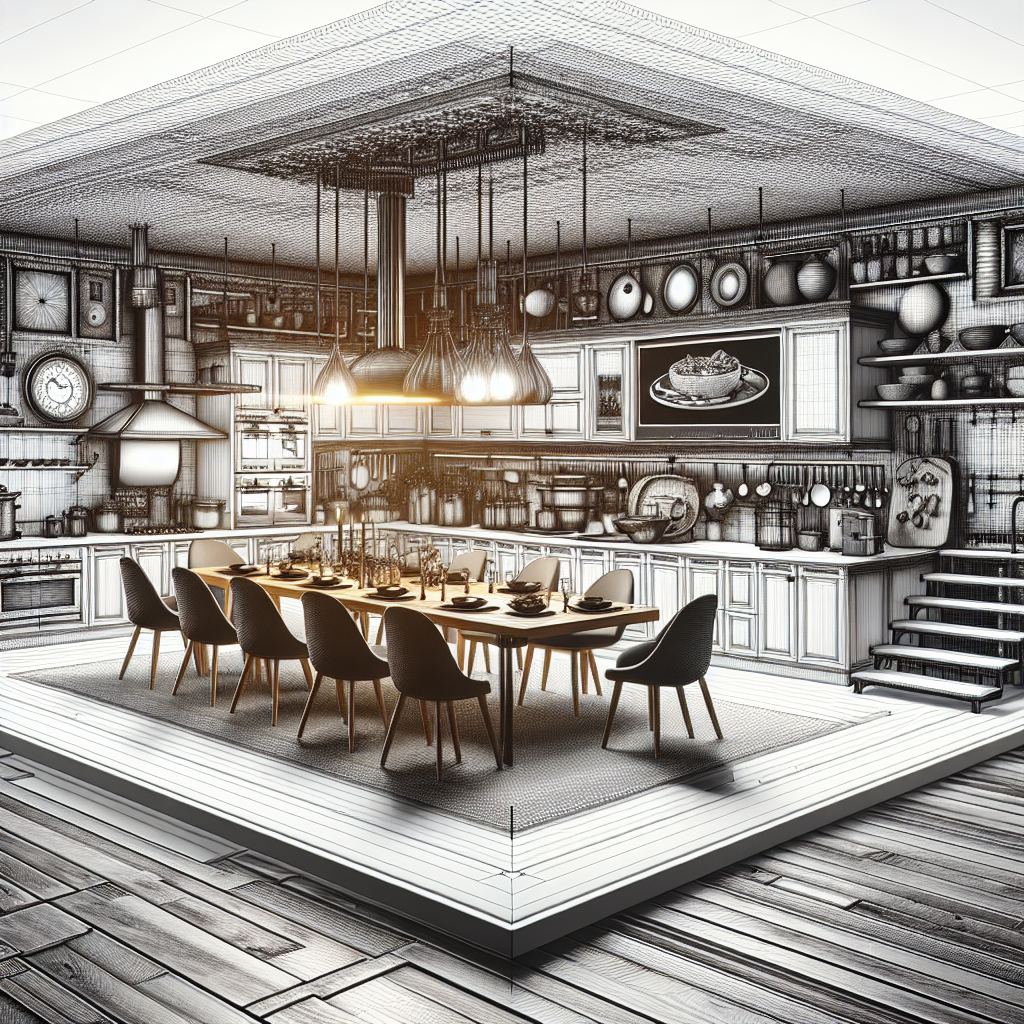
At Milan Design Week 2026, V-ZUG’s Table Rituals installation, conceived by architect Elisa Ossino, offers a profound reimagining of the kitchen as a silent stage for human connection. This immersive experience—showcased at V-ZUG Studio Milano—prioritizes the rhythmic beauty of daily rituals over technological spectacle. By integrating appliances like the invisible induction system Integra, it dissolves hardware into architecture, allowing technology to operate parallel to user interaction. For AEC professionals, this signals a critical shift: designing spaces where technology enhances, rather than disrupts, human presence. As BIM coordinators and architects increasingly focus on experiential design, Table Rituals exemplifies how invisible systems and ritualistic workflows can redefine residential and commercial environments.
The Kitchen as Ritual Space: Design Philosophy in Practice
Elisa Ossino’s installation reframes the kitchen not as a utilitarian zone but as a poetic domain where daily gestures unfold. The project emphasizes “quiet precision,” where appliances like Integra become architectural elements rather than focal points. This philosophy resonates deeply with AEC workflows, where spaces must balance functionality with emotional resonance. For architects, it demands a move toward behavior-centric modeling—using BIM tools like Revit or ArchiCAD to simulate how rituals (e.g., meal prep, communal dining) flow through a space. The installation’s material interplay—interlaced wood, metal, and fiber—mirrors the layered textures modern BIM workflows must coordinate, ensuring structural systems coexist harmoniously with human activity.
Silent Technology Integration: BIM and Smart Systems Coordination
Table Rituals’ cornerstone is its “invisible induction system,” which operates silently to preserve the sanctity of human interaction. This aligns with the AEC industry’s push toward IoT-integrated design, where BIM must model smart systems without visual clutter. For BIM coordinators, this requires precise coordination: tagging appliances in models to avoid clashes, using IFC standards for interoperability, and ensuring MEP systems like electrical wiring support seamless tech integration. Arena-CAD’s BIM services excel in such scenarios, enabling clash detection for concealed systems. The installation’s focus on “parallel” tech-user interaction underscores a key challenge: designing spaces where sensors, lighting, or appliances respond intuitively—prioritizing user rhythm over digital noise.
Human-Centered Design in AEC Workflows
Ossino’s work champions the “unfolding gesture,” where small, repeated actions define a space’s soul. This human-centric approach challenges AEC teams to adopt participatory design methods. For surveyors and reality-capture specialists, it means leveraging laser scanning or photogrammetry to document existing user behaviors—data that informs BIM simulations. Project managers can replicate this by integrating post-occupancy analysis into workflows, using tools like Dynamo to model how spatial adjustments impact rituals. Enginyring’s reality-capture services provide the foundation for such insights, ensuring designs adapt to real-world rhythms rather than static blueprints. As Milan Design Week 2026 demonstrates (e.g., ROOM FOR DREAMS’ ritual-driven encounters), success lies in spaces that evolve with users—a concept BIM must support through parametric modeling and scenario testing.
Milan Design Week 2026: A Catalyst for AEC Innovation
Milan Design Week 2026 has emerged as a blueprint for future-focused design, with Table Rituals leading a trend toward “utopian optimism” and creative courage. Beyond V-ZUG, events like ROOM FOR DREAMS showcase how large-scale installations and cinematic storytelling can inform architectural narratives. For AEC professionals, this highlights the need for cross-disciplinary collaboration—merging BIM workflows with experiential design thinking. Architects can draw inspiration from installations like Neri&Hu’s ritual-inspired tableware or Totemic’s lighting-as-adornment concepts, translating them into digital models that prioritize sensory experience. Platforms like designboom provide invaluable trend insights, helping teams anticipate shifts in materiality, connectivity, and spatial storytelling.
Practical Steps for AEC Professionals:
- Model Ritual Flows in BIM: Use Revit or ArchiCAD to simulate daily movement patterns, ensuring furniture and appliances align with natural human gestures.
- Prioritize Concealed Technology: Specify integrated systems (e.g., induction cooktops) in BIM models, tagging them for MEP coordination to avoid visual disruption.
- Leverage Reality Capture: Employ laser scanning to document existing spatial behaviors, then apply data to BIM for evidence-based design adjustments.
- Adopt Human-Centric KPIs: Define success metrics based on user experience (e.g., reduced task completion time) rather than purely technical outputs.
- Monitor Design Trends: Follow platforms like designboom for Milan Design Week insights, translating innovations into BIM-compatible concepts.
V-ZUG’s Table Rituals installation is more than an art piece—it’s a manifesto for AEC professionals seeking to redefine spaces where technology and humanity coexist harmoniously. By embedding ritual-centric design into BIM workflows, architects and engineers can create environments that honor both digital precision and human presence. As Milan Design Week 2026 underscores, the future of built environments lies not in louder technology, but in quieter, more intentional spaces where every gesture unfolds with purpose.