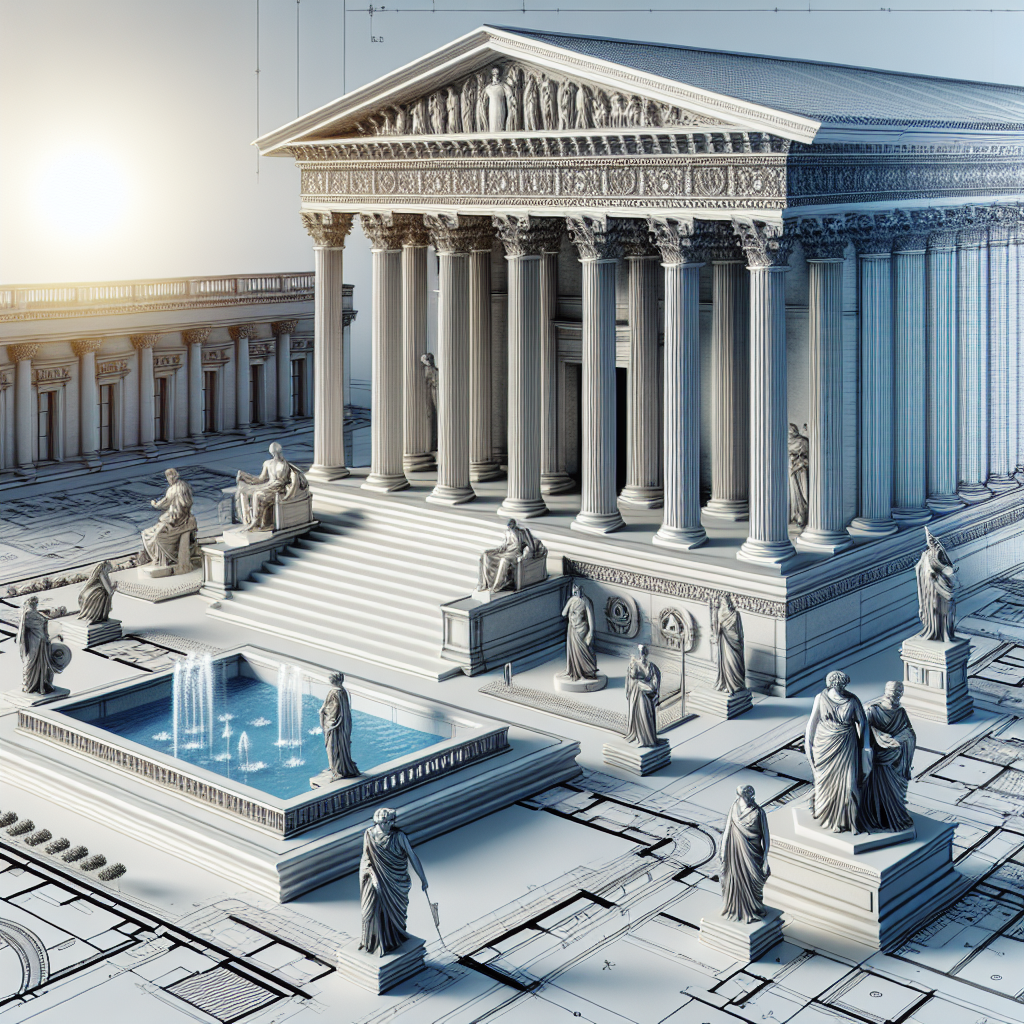
Architecture in the public sphere has long been a reflection of national values and civic identity. Yet President Trump’s proposed classical architecture projects in Washington D.C.—including the controversial “Arc de Trump” and other grand structures—have sparked intense debate among professionals. Pulitzer Prize-winning architecture critic Paul Goldberger has provided a scathing analysis of these initiatives, revealing tensions between authentic classical principles and political spectacle. As the AEC industry grapples with these developments, professionals must navigate the intersection of design integrity, political messaging, and technical execution. Projects of this scale demand rigorous BIM workflows, precise surveying, and adherence to historical standards—requirements where firms like Arena CAD and Enginyring’s reality-capture services play critical roles in ensuring fidelity to design intent.
Trump as De Facto Architect: The ‘Arc de Trump’ and Beyond
The proposed triumphal arch for Washington D.C., nominally designed by Nicolas Charbonneau of Harrison Design, exemplifies how Trump operates as both client and architect. Goldberger notes that these projects “exist to fulfill no need other than his increasingly imperial desires.” This pattern extends beyond the arch to a spree of classical-inspired structures reflecting pools, bunker “shed” ballrooms, and a presidential library concept. Trump’s direct involvement in design decisions bypasses traditional architectural processes, reducing classical elements to mere branding tools rather than expressions of civic purpose. For BIM coordinators and CAD technicians, this presents unique challenges: translating politically driven concepts into technically viable models while maintaining spatial accuracy and compliance with historical precedents. Arena CAD’s BIM tools could document such projects with precision, but the underlying intent remains fundamentally at odds with collaborative design principles.
Classical Architecture vs. Trumpian Classicism: Goldberger’s Critique
Goldberger draws a sharp distinction between classical architecture as historically practiced and Trump’s interpretation. Genuine classical design, he argues, embodies “dignity and order” and “Jeffersonian decorum.” In contrast, Trump’s vision manifests as “over-the-top gaudiness and excess—not Jeffersonian decorum but super-size Las Vegas vulgarity.” This critique extends to the National Civic Art Society, a group advocating for traditional architecture, which initially saw Trump as a patron but now faces backlash. Their movement risks being hijacked and remade in Trump’s image, associating classical principles with authoritarian symbolism rather than democratic ideals. For architects and engineers, this underscores the importance of contextual sensitivity: applying classical orders proportionally and harmoniously, as seen in structures like the Library of Congress’ Thomas Jefferson Building, rather than superficially appending columns or arches. Enginyring’s engineering services could ensure structural integrity in such designs, but the aesthetic disconnect remains unresolved.
Political Implications: From Democratic Ideals to Authoritarian Symbols
Goldberger frames Trump’s architectural ambitions through a historical lens, comparing them to Mussolini’s monumental projects in Rome. “Washington was conceived as an expression of democracy,” he writes, “a place in which the largest and grandest public building was the Capitol, where the representatives of the people gathered.” The White House, by contrast, was designed as a “mansion, not a palace”—a human-scaled structure avoiding intimidation. Trump’s spree of oversized, classical-style structures, however, subverts this democratic ethos, transforming public space into platforms for imperial imagery. For surveyors and reality-capture specialists, this highlights the need for meticulous documentation of existing conditions before design intervention. Tools like laser scanning from Enginyring could provide accurate base data, but the ethical dimension remains: should the profession enable projects that prioritize political messaging over functional or civic value?
Industry Impact: BIM, Reality Capture, and the Risks of Political Design
The execution of Trump’s proposed projects would require advanced AEC technologies, but the industry must confront potential reputational risks. Goldberger warns that associating classical architecture with Trumpism could “do the movement of contemporary classicism any good,” reducing it to a “manifestation of Trumpism” akin to border walls. For BIM managers, this necessitates stringent version control and clash detection to avoid design inconsistencies that might compromise architectural authenticity. Reality-capture specialists must ensure that digital representations accurately reflect historical context, not just political mandates. Arena CAD’s CAD/BIM workflows could streamline coordination among stakeholders, yet the core issue persists: when design serves political ends rather than public good, even the most sophisticated tools cannot salvage the integrity of the built environment. Projects of this scale demand unwavering adherence to the “Guiding Principles for Federal Architecture,” which emphasize timeless design over fleeting symbolism.
Practical Steps for AEC Professionals:
- BIM Coordinators: Implement parametric libraries for classical elements to maintain historical accuracy and proportionality.
- Architects: Avoid superficial classical ornamentation; prioritize authentic spatial harmony and material authenticity.
- Project Managers: Conduct stakeholder workshops to evaluate the political implications of design choices before proceeding.
- Surveyors: Use LiDAR scanning to document existing conditions, ensuring design interventions respect historical context.
In conclusion, Trump’s architectural ambitions reveal a fundamental clash between classical ideals and political spectacle. Paul Goldberger’s critique serves as a vital reminder that architecture’s true purpose lies in elevating public discourse—not reinforcing authoritarian imagery. For the AEC industry, this demands a dual focus: leveraging tools like Arena CAD’s BIM solutions for technical excellence while upholding design integrity through rigorous adherence to historical principles. As projects move forward, the profession must ask: Are we building monuments to democracy, or to individual power? The answer will define the legacy of our built environment for generations.