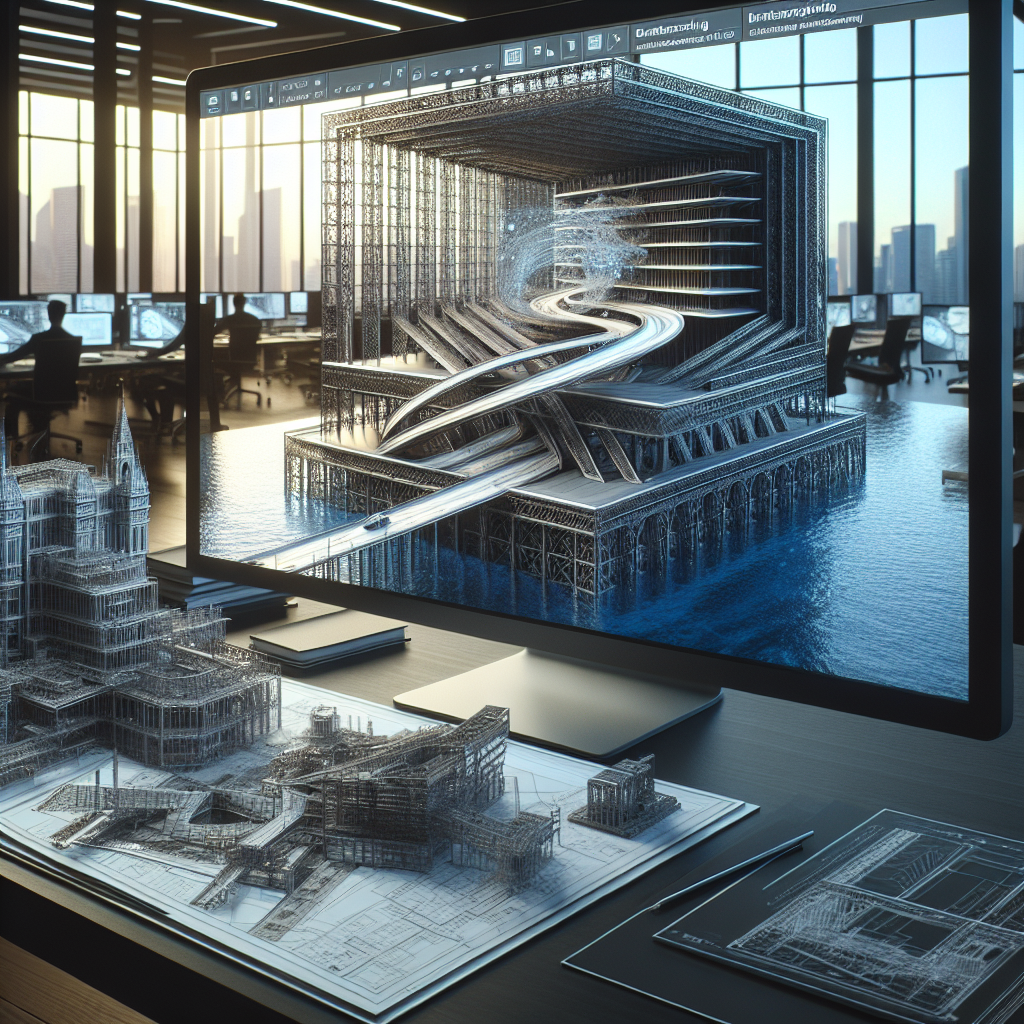
In an industry historically fixated on completion and permanence, a paradigm shift is underway. Architects and engineers increasingly view buildings not as static finished products, but as dynamic entities designed for evolution. This “unfinished” aesthetic – characterized by exposed structures, adaptable layouts, and intentional ambiguity – rejects the illusion of static perfection in favor of honest, responsive design. For CAD technicians, BIM coordinators, and engineering teams, this approach demands fundamental reconsiderations of modeling practices, documentation standards, and collaborative workflows. As projects like Highacres demonstrate, buildings that purposefully embody incompleteness require equally sophisticated digital frameworks that accommodate change rather than resist it.
The Philosophy Behind Deliberate Incompleteness
The concept of architectural incompleteness represents a radical departure from conventional construction thinking. Rather than masking construction processes or structural systems, these buildings celebrate their unfinished state as a design ethos. As highlighted in Architizer’s analysis, this approach “operates through extension, adaptation, and incompleteness, suggesting that a building’s life does not begin at completion but continues to unfold long after.” This philosophy directly challenges the traditional “freeze-frame” mentality where buildings are only celebrated once photographed in their supposed final state. For AEC professionals, the implications extend beyond aesthetics: designing for incompleteness inherently prioritizes flexibility, sustainability, and long-term adaptability. Buildings like Highacres deliberately juxtapose historical elements with new interventions without forcing a unified language, creating spaces that evolve organically with changing needs. This approach necessitates a rethinking of how we model, document, and coordinate such projects in digital environments.
Case Studies: Highacres and Beyond
Duncan Foster Architects’ Highacres project exemplifies this strategy through its transformation of a 1930s Arts and Crafts house. Instead of restoring or replacing the existing structure, the architects embraced a “careful juxtaposition” – retaining original features like low ceilings, small windows, and timber beams while introducing spatially open extensions. This deliberate contrast creates a dialogue between past and present without forcing resolution. The building’s identity emerges from its tension between preservation and transformation, with visible structural systems and unfinished material interfaces serving as design features rather than defects. Other examples in this movement include structures with exposed concrete frameworks, modular systems designed for disassembly, and spaces with intentionally undefined zones left for future programming. For CAD technicians modeling these projects, the challenge lies in representing not just the physical building, but its potential future states. This requires nuanced LOD (Level of Development) assignments and clear documentation of which elements are fixed versus intentionally variable.
Technical Implications for CAD/BIM Workflows
Designing for incompleteness fundamentally reshapes digital modeling and documentation practices. Traditional CAD workflows that assume fixed geometries become inadequate. Instead, BIM coordinators must implement parametric modeling techniques in Revit or ArchiCAD that allow components to adapt – using adaptive components for undefined zones or configurable families for structural systems intended for future modification. Documentation standards must evolve to clearly distinguish between “as-built” and “as-intended-to-evolve” elements. For instance, exposed structural elements like those in Highacres might be modeled with specific part-marking systems that remain visible in all views, while variable spaces could use ghosted geometry or transparent materials to indicate flexibility. Reality capture specialists play a crucial role here, using laser scanning to document existing conditions that become part of the building’s intentional language. This approach demands new collaboration protocols where engineers and architects jointly define “change points” in the model. Enginyring’s engineering services increasingly support these workflows by developing analytical models that simulate how structures will perform under various future configurations, ensuring the “unfinished” elements remain structurally sound through multiple adaptation cycles.
Future-Proofing Through Digital Tools
The true power of embracing incompleteness lies in its alignment with digital transformation in construction. Building Information Modeling serves as the ideal platform for designing adaptable structures, allowing engineers and architects to create digital twins that evolve alongside physical buildings. Rather than creating static documentation, BIM models become living repositories of design intent, containing not just geometry but rules and parameters governing future changes. For project managers, this approach offers significant advantages through reduced lifecycle costs and enhanced building resilience. BIM coordinators can leverage cloud-based collaboration platforms like Autodesk Construction Cloud to manage iterative design changes, ensuring all stakeholders understand which elements are intentionally variable. Reality capture specialists provide the crucial bridge between digital models and physical reality, updating models as buildings adapt. Arena-CAD’s specialized BIM services support these workflows by developing custom libraries of adaptable components that can be modified to suit future needs without requiring complete model reconstruction. This digital-first approach to incompleteness transforms how we think about building longevity – shifting the focus from initial construction to continuous performance optimization over decades.
Practical Steps for Implementing Incomplete Design
- Adopt parametric modeling using Revit or ArchiCAD with configurable families for adaptive elements
- Implement clear LOD protocols distinguishing between fixed and variable components with consistent naming conventions
- Document design intent using shared parameters and custom properties that specify future adaptation scenarios
- Establish reality capture baselines through laser scanning to document existing conditions that inform future changes
- Develop collaborative workflows between design teams and engineering consultants to analyze structural implications of future modifications
Embracing architectural incompleteness represents more than an aesthetic trend; it reflects a fundamental reimagining of how buildings interact with time and change. For CAD technicians, BIM coordinators, and engineering teams, this paradigm shift demands both technical innovation and conceptual flexibility. By developing digital frameworks that accommodate evolution rather than resisting it, we create infrastructure that serves generations rather than decades. As projects like Highacres demonstrate, the most honest and sustainable architecture may not be the one that appears finished, but the one designed to adapt. In an era of climate uncertainty and changing programmatic needs, this approach offers not just design solutions, but a philosophy for building resilience into our built environment.