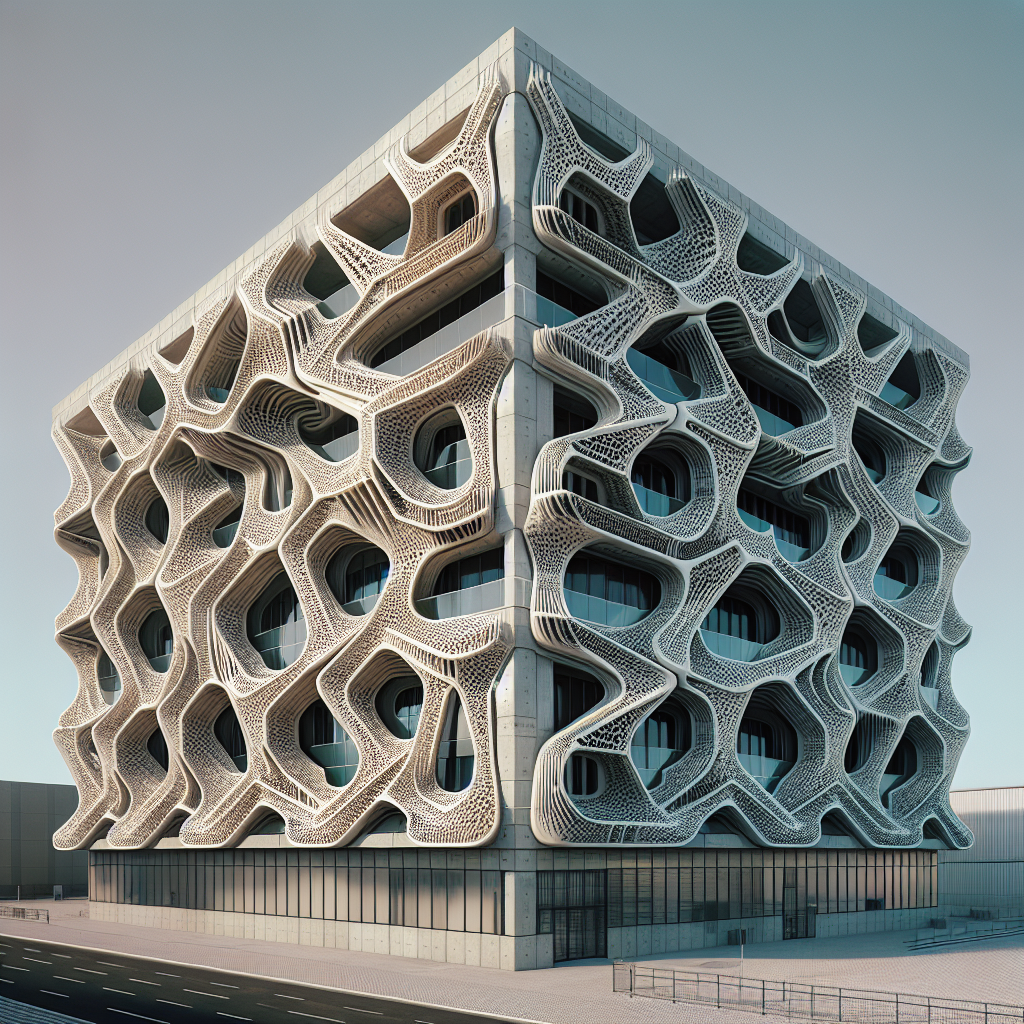
The integration of advanced manufacturing and computational design is revolutionizing building envelope performance and aesthetics. Studio WE’s CeraShingle project exemplifies this convergence, utilizing robotic 3D printing to transform traditional clay into a sophisticated, light-responsive facade system. This modular ceramic cladding moves beyond static surfaces, creating dynamic visual experiences through carefully engineered curvature, perforation, and layered textures. For architects and BIM coordinators seeking innovative solutions that merge material tradition with cutting-edge technology, such systems offer a compelling path towards more responsive, sustainable, and visually engaging building skins. The potential to enhance daylighting, thermal performance, and architectural expression makes this development highly relevant for the modern AEC industry.
Technical Specifications and Material Innovation
Studio WE’s CeraShingle system represents a significant leap in ceramic facade technology. Each shingle is meticulously robotically printed using clay, resulting in precise, complex geometries unachievable through traditional ceramic manufacturing methods. The units are standardized at approximately 400 millimeters by 130 millimeters, with a weight of just over one kilogram. This specific sizing is crucial for handling efficiency, structural integrity within a modular system, and ease of replacement during maintenance cycles on scalable facade assemblies. The choice of clay as the base material leverages its inherent durability, thermal mass properties, and aesthetic qualities, while additive manufacturing unlocks unprecedented design freedom. The resulting shingles are not merely decorative elements but functional components designed to interact dynamically with their environment, forming the basis of a responsive architectural skin.
Parametric Design and Computational Workflows
The sophisticated forms of the CeraShingles are generated through advanced parametric design and computational workflows. Designers leverage software capable of handling complex geometries and material simulations to define the intricate curvature, precise perforation patterns, and layered textures across each shingle. This process involves defining parameters such as depth of perforation, radius of curvature, and angle of ridges, which directly influence the shingle’s light interaction and structural behavior. The computational approach allows for the optimization of each unit for both its individual performance and its contribution to the overall facade assembly. For BIM coordinators working in platforms like Revit or ArchiCAD, integrating such complex, non-standard components requires careful management of family creation and parameter mapping to ensure accurate representation within the building information model, enabling clash detection and quantity takeoff.
Robotic Fabrication and Assembly Process
The actual production of CeraShingles relies on robotic 3D printing technology, enabling the precise deposition of clay layers according to the digital design. This additive process minimizes material waste compared to subtractive methods and allows for the creation of complex, organic forms. Post-printing, the clay components undergo standard ceramic firing processes to achieve their final strength and durability. The installation methodology is equally critical. Shingles are installed with calibrated overlaps designed to create a layered, textured surface. This overlapping strategy, combined with their specific geometric variations, ensures the facade performs as a unified system, not just an assembly of individual parts. The system’s modularity facilitates efficient on-site assembly and future replacement. Surveyors and reality capture specialists might employ photogrammetry or laser scanning to capture the precise geometry of installed facades for verification or as-built documentation.
Applications and Performance Benefits
The CeraShingle system offers tangible performance advantages beyond aesthetic novelty. The dynamic light interaction—shifting effects of shadow, reflection, and texture based on viewing angle and solar exposure—can significantly contribute to building energy performance. The facade acts as a responsive skin, potentially reducing solar heat gain through shading effects while allowing controlled daylight penetration. The inherent thermal mass of the ceramic material helps regulate interior temperatures. Architecturally, it transforms the facade from a static element into one that changes character throughout the day and seasons, enhancing the building’s visual interest and connection to its surroundings. Project managers benefit from the system’s predictability; the standardized units and modular design streamline construction logistics, reducing on-site complexity and potential delays. This makes it particularly suitable for high-profile projects where both performance and distinctive design are paramount.
Practical Implementation Steps
- Conceptual Design: Define desired light-responsive effects and overall facade aesthetic using parametric design tools.
- Digital Modeling: Develop precise 3D models of the shingle unit and assembly logic, ensuring BIM compatibility.
- Robotic Printing: Partner with specialized facilities for clay deposition and firing to produce components.
- Detailed Engineering: Conduct structural and thermal analysis to ensure system performance meets requirements.
- On-Site Assembly: Install with strict adherence to calibrated overlap specifications and tolerance checks.
The development of systems like CeraShingle underscores the growing importance of additive manufacturing and computational design in pushing the boundaries of architectural materials and performance. As the AEC industry increasingly embraces digital fabrication, the ability to create bespoke, responsive building envelopes will become a key differentiator. For firms like Enginyring, which specialize in integrating cutting-edge technology into construction processes, such innovations offer exciting opportunities to deliver projects that are not only structurally sound but also environmentally responsive and visually compelling. The future of facade design lies in this synergy between ancient materials like clay and advanced manufacturing techniques, enabling buildings to interact intelligently with their environment. Arena-CAD’s expertise in BIM coordination will be essential in managing the complexity of integrating these novel, parametric components into comprehensive project workflows.