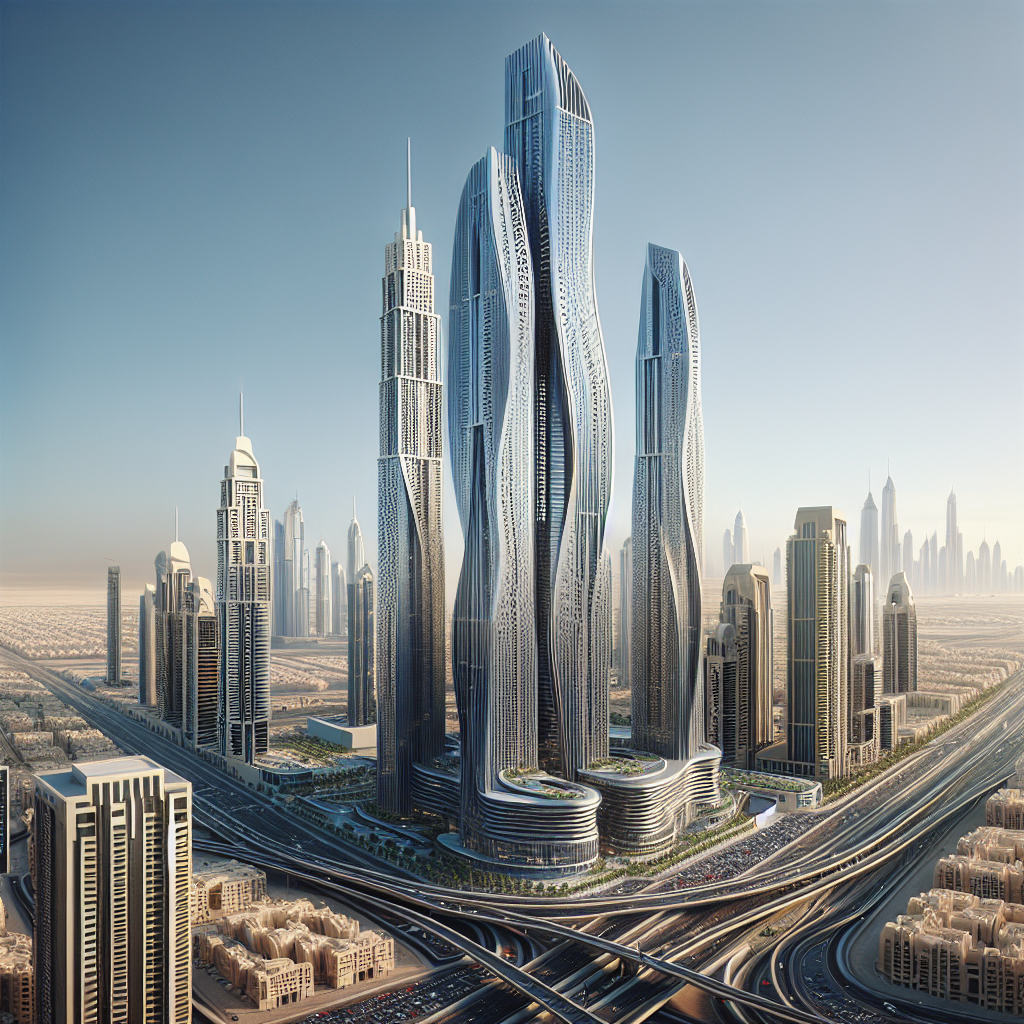
Dubai’s skyline continues to evolve with innovative structural solutions, and the recently completed Wasl Tower stands as a testament to advanced engineering and sustainable design principles. Rising 302 meters (990 feet) along Sheikh Zayed Road near the Burj Khalifa, this mixed-use skyscraper—comprising hotel, residential, and office spaces—distinguishes itself through a sophisticated parametric terracotta ceramic facade. Developed by UNS in collaboration with engineering consultant Werner Sobek, the tower integrates traditional materials with cutting-edge computational design and environmental performance strategies, offering valuable insights for professionals navigating the complexities of modern high-rise construction and facade engineering.
Project Overview: Form, Function, and Facade Innovation
Wasl Tower represents a significant leap in high-rise design, moving beyond单纯的 height towards sculptural expression and environmental responsiveness. Its most defining feature is a continuous, full-height terracotta ceramic facade system—one of the tallest of its kind globally—comprising thousands of individually engineered ceramic fins. This isn’t merely an aesthetic cladding; it functions as a dynamic environmental system. The tower’s form employs a subtle “contrapposto” movement, creating a sinuous profile that shifts perspective depending on the viewing angle, allowing it to respond intelligently to solar orientation and surrounding urban context. This sculptural approach, reminiscent of classical art, integrates programmatic diversity within a vertically organized structure while maintaining a unified envelope that bridges the commercial density of the Burj Khalifa area with the more pedestrian-focused City Walk district.
The facade’s development required extensive collaboration between architects, structural engineers, facade specialists, and environmental consultants. Teams utilized advanced computational tools to model the complex geometry and its performance implications. The sheer scale—302 meters tall—posed significant challenges in material specification, structural integration, and fabrication logistics. Ensuring the durability and performance of terracotta at such heights demanded rigorous testing and adherence to international standards for wind load resistance, thermal expansion, and material longevity. The project underscores the critical role of integrated BIM workflows in coordinating complex geometries and multi-disciplinary requirements, a core focus for firms leveraging platforms like those offered by Arena-Cad for facade modeling and coordination.
Parametric Facade Engineering: From Data to Materiality
The heart of Wasl Tower’s innovation lies in its parametrically designed ceramic facade. Thousands of terracotta fins were generated using parametric modeling software, where each fin’s specific geometry—its depth, angle, and spacing—was algorithmically optimized based on solar analysis data for the building’s unique orientation. This process allowed UNS to create a responsive shading system that maximizes passive solar control while permitting controlled daylight penetration into the interiors. The fins form a continuous outer layer with integrated airflow channels, enhancing natural ventilation and reducing reliance on mechanical cooling. Reflective glazing is strategically incorporated behind the fins to further improve thermal performance.
Key technical aspects include:
- Computational Design: Utilizing software like Rhino/Grasshopper or similar parametric platforms to generate the complex, non-repetitive fin geometries based on environmental inputs (sun path analysis, wind studies).
- Material Engineering: Selection and testing of high-performance terracotta ceramic panels capable of withstanding Dubai’s intense UV exposure, significant thermal cycling, and high-altitude wind pressures. The material’s inherent thermal mass helps buffer temperature fluctuations.
- Structural Integration: Designing the supporting steel substructure capable of transferring wind and dead loads safely to the primary building frame while accommodating the non-uniform nature of the parametric fins.
- Precision Fabrication: Developing custom manufacturing processes for the fins, likely involving CNC-molded terracotta segments, to ensure the exact geometries required for optimal performance could be produced at scale and assembled with high tolerances. This level of precision coordination is essential and often supported by specialized Arena-Cad services in fabrication modeling.
The result is a facade that performs environmentally—reducing solar heat gain by an estimated 10% compared to older Dubai high-rises—while creating a visually striking, culturally resonant expression using a material familiar to the region but re-engineered for contemporary skyscraper scale.
Sustainability Integration: Beyond the Facade
While the parametric terracotta facade is the most visible sustainability feature, Wasl Tower incorporates multiple strategies to enhance its environmental performance and occupant well-being. The facade system works synergistically with other building systems:
- Energy Efficiency: The combination of passive shading, reflective glazing, and the thermal mass of the terracotta significantly reduces cooling demand. This is further augmented by solar thermal panels (likely providing domestic hot water) and a daylight-responsive lighting system that adjusts artificial light levels based on available natural light, minimizing energy consumption.
- Occupant Comfort: The design philosophy, articulated by UNS founder Ben van Berkel, explicitly prioritizes “health, comfort, and well-being.” The facade promotes natural ventilation and glare control, while the building’s internal layout and materials contribute to a healthier indoor environment. This holistic approach aligns with WELL Building Standard principles increasingly adopted by forward-thinking projects.
- Operational Efficiency: The integration of Building Information Modeling (BIM) throughout the project lifecycle—from design and fabrication to construction management and potentially operations—allows for better energy monitoring, predictive maintenance planning, and optimized building operation, areas where Enginyring provides advanced construction simulation and digital engineering services.
- Material Choice: Utilizing terracotta, a locally familiar and sustainable material (with low embodied energy compared to alternatives like aluminum), reinforces regional identity while contributing to the project’s overall environmental credentials. The re-engineering of traditional materials for high-rise application demonstrates sustainable innovation.
The tower completes a major milestone in Dubai’s architectural ambitions, proving that iconic skyscrapers can achieve significant environmental benefits through integrated design and advanced engineering solutions.
Technical Implementation: Challenges and Solutions
Bringing Wasl Tower’s vision to reality presented formidable technical challenges, particularly concerning the facade system. Key hurdles and their solutions included:
- Scale and Complexity: Managing the design, fabrication, and installation of thousands of unique, parametrically generated fins across a 302-meter facade required unprecedented coordination. This necessitated:
- Advanced BIM Modeling: Creating a detailed 3D model of the entire facade system, including the fins, substructure, and connections, for clash detection and sequencing. Platforms used likely included Revit or specialized facade BIM tools.
- Digital Fabrication: Developing a fully digital workflow from parametric design to CNC manufacturing, ensuring each fin was precisely fabricated to match the digital model. This minimizes on-site adjustments and waste.
- Modularization: Designing the facade in manageable, prefabricated modular units that could be assembled and lifted into place efficiently.
- Performance Validation: Rigorous physical and digital simulation was crucial:
- Computational Fluid Dynamics (CFD): Used to model airflow patterns around and through the fins, predicting wind loads and ventilation efficiency.
- Thermal Modeling: Simulating solar heat gain reduction and thermal performance under various Dubai climate scenarios.
- Structural Analysis: Extensive finite element analysis (FEA) on the substructure and connections to ensure safety under extreme wind conditions and seismic activity.
- Material Durability: Ensuring the terracotta’s longevity at extreme heights involved comprehensive accelerated weathering testing for UV resistance, thermal shock, and salt spray corrosion (relevant to Dubai’s coastal environment).
- Installation Logistics: Developing specialized lifting and positioning equipment and techniques for safely installing heavy, fragile ceramic fins at significant heights, often requiring custom rigging solutions and meticulous sequencing coordinated via BIM.
These challenges highlight the necessity of specialized expertise in high-rise facade engineering, advanced digital modeling, and precision construction management—services where firms like Arena-Cad and Enginyring provide critical support to the AEC industry.
Practical Steps for Implementing Advanced Facade Systems
Based on the lessons from Wasl Tower, AEC professionals can consider the following steps for similar projects:
- Early Integration: Involve facade engineering specialists and computational designers at the earliest conceptual stages to integrate performance goals with architectural vision.
- Parametric Workflow: Utilize parametric modeling tools to generate and optimize complex geometries based on environmental data (sun, wind).
- Holistic BIM: Implement a comprehensive BIM strategy encompassing all facade components, supporting structures, and MEP interfaces from design through fabrication and construction.
- Material & Performance Testing: Conduct rigorous material testing and performance simulations (thermal, structural, CFD) under project-specific conditions well before fabrication.
- Prefabrication Strategy: Design the facade system with prefabricated, digitally fabricated modules to enhance quality control, reduce on-site complexity, and accelerate installation.
- Collaborative Prototyping: Develop full-scale mockups to validate design intent, material performance, and installation methods before full-scale production.